
Upcoming Events
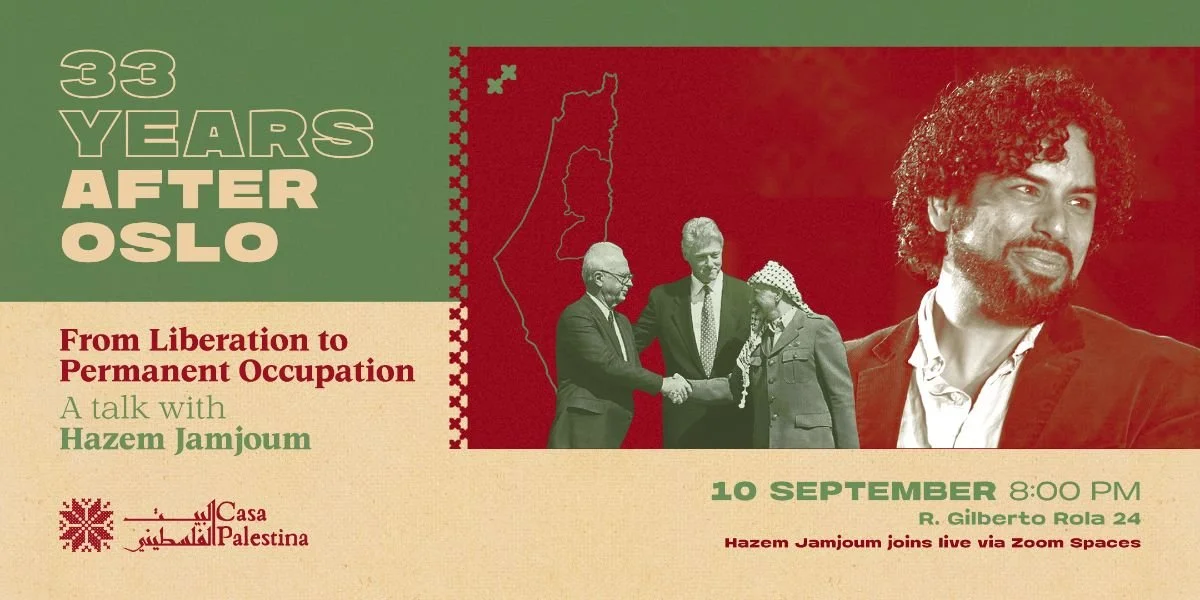
Year 33 after Oslo - From Liberation to Permanent Occupation
A talk with Palestinian educator, translator, and researcher Hazem Jamjoum
Thirty-three years after the signing of the Oslo Accords, what did they actually change, not only in the relationship between Israel and the Palestinians, but within the Palestinian liberation movement itself?
To mark 33 years since Oslo, Casa Palestina welcomes Hazem Jamjoum for a talk tracing the political processes that led to the agreements between the Palestine Liberation Organization and the State of Israel, and examining their lasting consequences for Palestine.
The evening will look beyond the familiar narrative of Oslo as a failed “peace process” to consider the agreements within the longer history of Zionist settler colonization and Palestinian struggle.
Hazem will explore the place of Palestinian self-government and statehood within Israeli colonial strategy, as well as the debates around statehood within the Palestinian liberation movement itself.
The talk will consider the transformation of the PLO, the establishment of the Palestinian Authority, and the political structures produced through Oslo — asking what these changes meant for Palestinian representation, refugees, liberation and the fragmentation of the Palestinian people.
More than three decades later, as Palestinians continue to confront dispossession, colonization and Israel’s ongoing genocide against the Palestinian people, the evening asks what it means to understand Oslo not simply as an agreement of the past, but as a political framework whose consequences remain deeply present.
A discussion with the audience will follow the talk.
Hazem Jamjoum will join us live via Zoom, with the audience gathering in person at Casa Palestina.
About Hazem Jamjoum
Hazem Jamjoum is a Palestinian educator based in London.
He is the founder and lead editor of Safarjal Press safarjal is Arabic for quince, a radical publishing house focused on translating socially engaged texts to and from the Arabic language.
He is an award-winning translator into English of Ghassan Kanafani’s The Revolution of 1936–1939 in Palestine and Maya Abu Al-Hayyat’s novel No One Knows Their Blood Type.
In August 2025, he curated the London exhibition Room 14: Artwork from the Palestinian Prisoners Movement, which brought together prison abolitionist and prisoner-support organizers around artworks smuggled out of Ofer military prison in Palestine.
Hazem has lectured and led popular education workshops on subjects including the history of the Palestinian struggle, radical archiving, Indigenous sovereignty, prison abolition, border justice, the politics of food, cultural production, and the political economy of empire and imperialism.
The restaurant will be open.
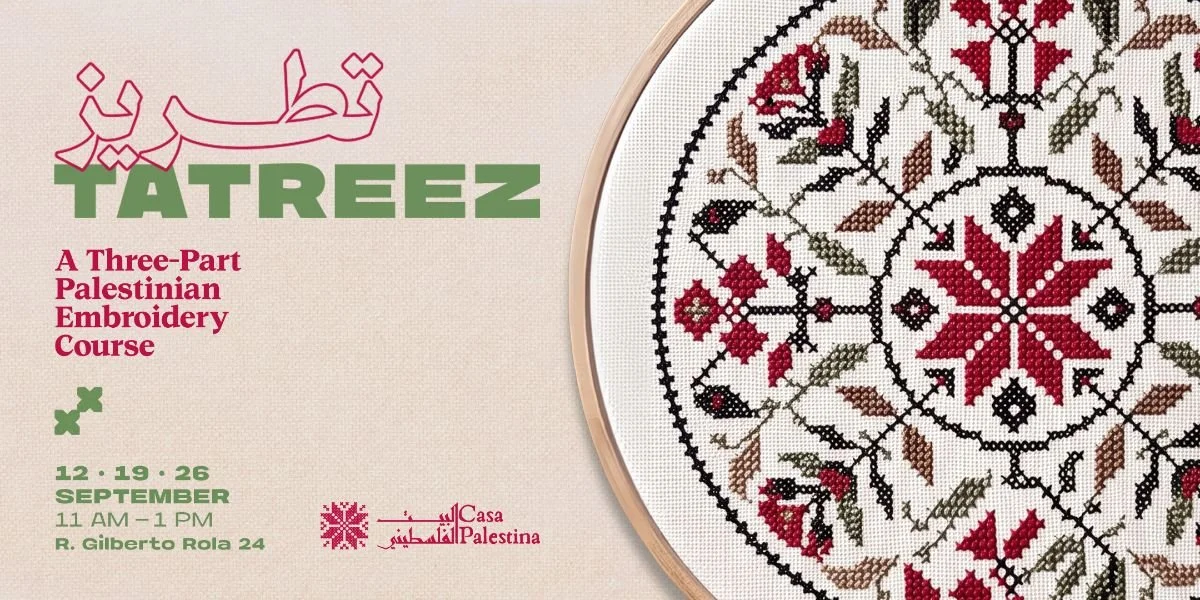
Tatreez: A Three- Part Palestinian Embroidery Course
The 3-session course introduces participants to tatreez, Palestinian embroidery, exploring its cultural history & its practical application
This three-session course introduces participants to tatreez, Palestinian embroidery, exploring its cultural history alongside its practical application.
Participants will first learn the foundations of tatreez and basic stitching techniques, before learning how to apply tatreez directly onto clothing and textiles. The course concludes with a Tatreez Circle, where participants can continue their projects, ask questions and receive guidance.
No previous embroidery experience is required. All embroidery materials are provided, except for the clothing or textile participants choose to embroider.
Dates: Saturday, September 12; Saturday, September 19; and Saturday, September 26
Time: 11:00 am–1:00 pm
Level: Beginner-friendly; no previous embroidery experience required
Materials: All embroidery materials are provided. For Session 2, participants bring their own garment, tote bag or textile to embroider.
Number of participants: 15 participants maximum
Session 1: Introduction to Tatreez
An introduction to Palestinian embroidery, its history, motifs and techniques.
Participants will:
Learn about the history and cultural significance of tatreez
Learn the basic cross-stitch technique
Begin stitching their own tatreez motif on an Aida fabric
Participants will leave the session with a foundation in cross-stitch and the basic skills needed to continue practicing tatreez.
Materials provided: embroidery thread, needles, Aida fabric, patterns and all necessary stitching materials.
Session 2: Tatreez on Clothing and Textiles
Participants will learn how to take tatreez beyond embroidery cloth and apply it directly to clothing and everyday textiles.
Each participant will bring an item they would like to embroider, such as a tote bag, T-shirt, shirt, or other suitable textile.
The session will cover:
Preparing ordinary fabric for counted cross-stitch
Using waste canvas to stitch tatreez onto clothing
Starting and securing the embroidery
Each participant will begin their own personalized tatreez project during the session.
Materials provided: embroidery thread, needles, patterns, waste canvas, and other necessary embroidery supplies.
Participants bring: one garment, tote bag or textile they would like to embroider.
Session 3: Tatreez Circle
The final session takes the form of a relaxed communal stitching circle.
Participants return with the projects they began during the course and spend the session stitching together, with guidance available throughout.
The Tatreez Circle provides an opportunity to:
Continue or finish individual projects
Ask questions and receive individual guidance
Experience embroidery as a communal practice
The session reflects the social nature of tatreez: not only as a technique, but as a practice traditionally shared through making, conversation, and time spent together.
About the Facilitator:
Aliya Beyhum is a curatorial researcher specializing in Arab heritage and material culture. She has worked closely with Arab dress and textiles, and holds an MPhil in Heritage Studies from the University of Cambridge, where her dissertation explored the relationship between tatreez and Palestinian national identity. Aliya is also a tatreez practitioner, and her workshops blend practical embroidery techniques with the stories, traditions, and meanings behind tatreez
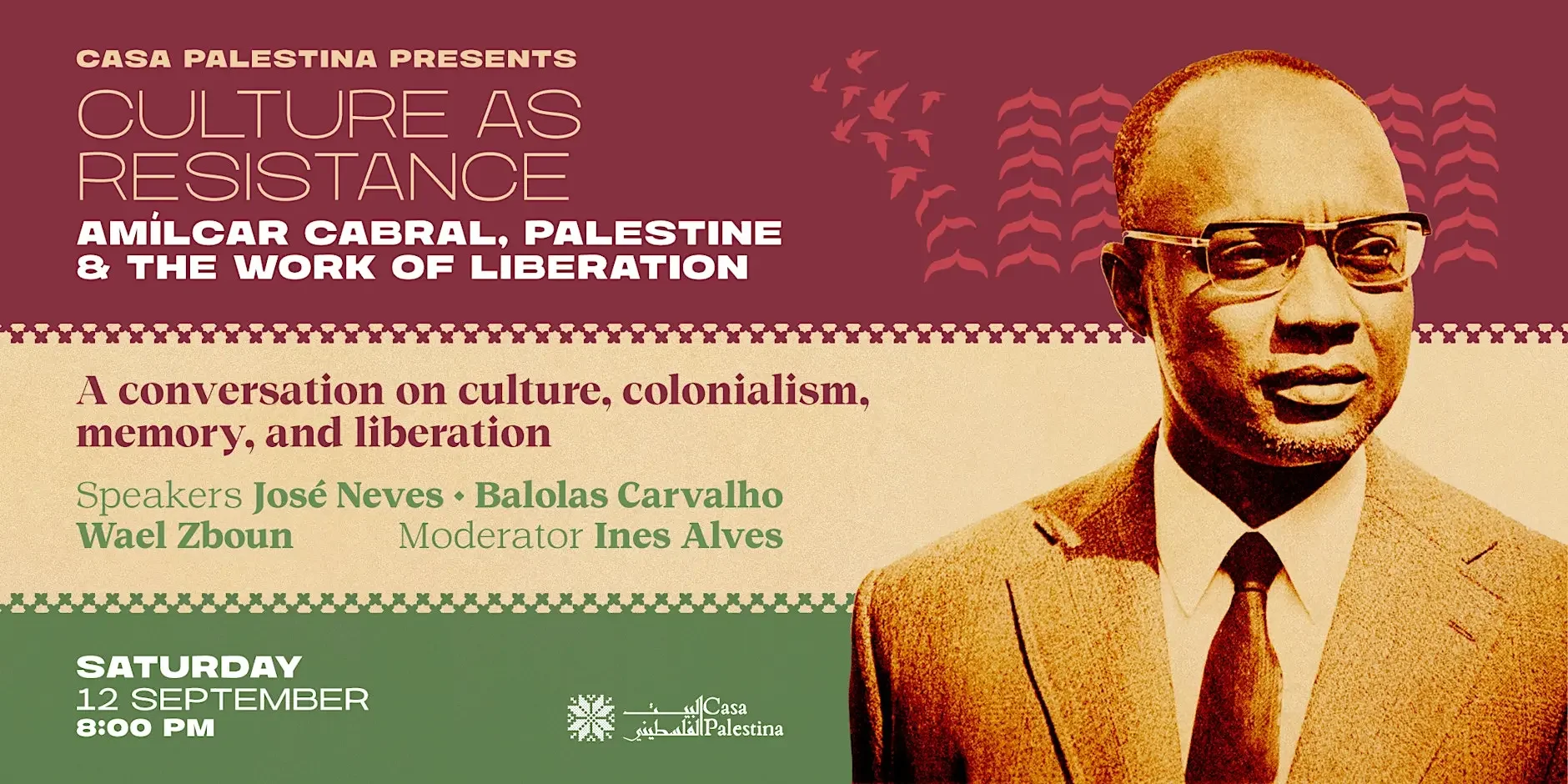
Culture as Resistance: Amílcar Cabral, Palestine & the Work of Liberation
A conversation on Amílcar Cabral, Palestine, culture, colonialism, memory, solidarity, and the ongoing work of liberation.
On September 12, the anniversary of Amílcar Cabral’s birth, Casa Palestina brings together Palestinian, Portuguese, and Lusophone voices for a conversation on culture, colonialism, memory, and liberation.
One of the most influential anti-colonial thinkers of the 20th century, Cabral understood culture not as something separate from political struggle, but as a fundamental part of resistance and collective liberation. His work continues to resonate far beyond Guinea-Bissau and Cabo Verde, raising urgent questions around land, identity, political education, international solidarity, and the role of culture in confronting colonial power.
Bringing Cabral’s ideas into conversation with Palestine, this panel will explore how culture can preserve memory, sustain identity, challenge dominant narratives, and become a space of resistance. Rather than equating distinct histories and experiences, the discussion will create space for exchange between different struggles against colonialism, asking what these histories can teach us about solidarity and the ongoing work of liberation today.
Speakers
José Manuel Viegas Neves
José is a Portuguese historian and Assistant Professor at the NOVA School of Social Sciences and Humanities (NOVA FCSH) in Lisbon, where he also serves as Deputy Director. His research explores the intersections of culture, ideology, politics, and identity in contemporary Portugal, with a particular focus on nationalism, political ideologies, post-colonial movements, and the history and sociology of sport.
Balolas Carvalho
Balolas is a Portuguese journalist, documentary filmmaker, and producer working at the intersection of human rights, international affairs, and decolonial movements. As a cultural agitator, her work is dedicated to telling stories and creating spaces that resist, remember, and reimagine.
Wael Zboun
Wael is a Palestinian political researcher, writer, consultant, and PhD researcher in Political Science and International Relations at ISCTE – University Institute of Lisbon. His research focuses on European foreign policy, Palestine, international law, and the relationship between normative principles and geopolitical interests, with particular attention to EU policy toward the Palestinian territories since October 7, 2023. His interdisciplinary work examines political power, international legitimacy, settler colonialism, state recognition, and the gap between political commitments and practice.
Moderator
Inês Margarida Alves
Inês studied Philosophy and writes poetry. She is currently developing a research project that draws on her own biography while exploring questions of language, family memory, identity, and Cape Verdean heritage. Through writing and artistic and cultural research, the project examines the relationships between belonging, diaspora, and ancestry, while creating new spaces for reflection on the stories we inherit and the ways we tell them to ourselves.
The restaurant will be open.
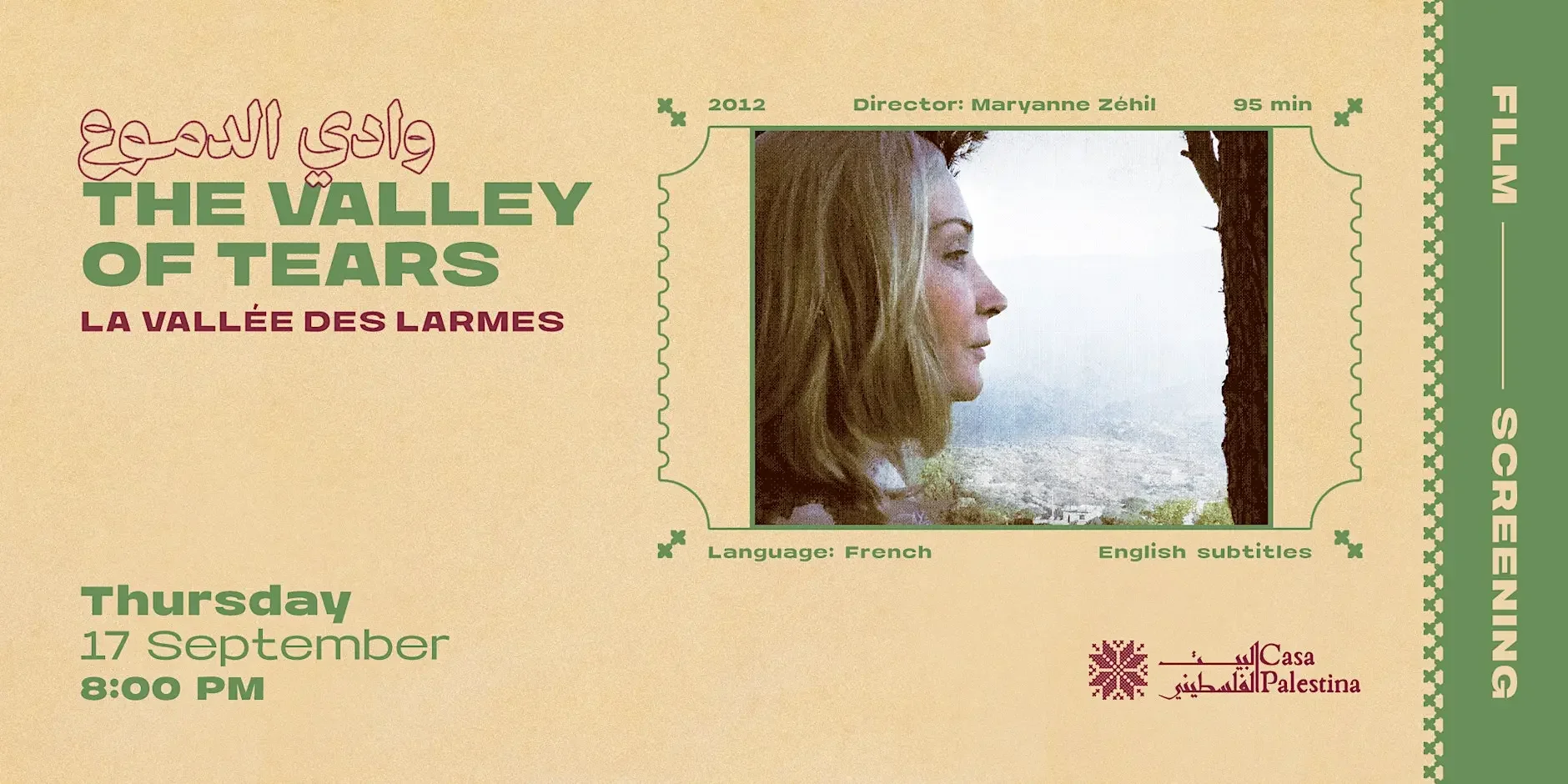
The Valley of Tears - A Screening for Sabra & Shatila
Remembering Sabra and Shatila through The Valley of Tears.
THE VALLEY OF TEARS
La Vallée des larmes
This September, Casa Palestina will screen The Valley of Tears to mark the anniversary of the Sabra and Shatila massacre of 16–18 September 1982.
Directed by Lebanese-Canadian filmmaker Maryanne Zéhil, the film follows Marie, a Montreal publisher who begins receiving the written testimony of Ali, a young Palestinian who grew up in a refugee camp in Lebanon. As she searches for the person behind the story, she is drawn from Montreal to Lebanon and into the memory of Sabra and Shatila.
Moving between the personal and the political, The Valley of Tears explores testimony, trauma, exile, and the ways histories of violence continue to live across generations.
More than four decades later, we gather at Casa Palestina to remember — and to consider the role of testimony in preserving memory and resisting erasure.
In French with English subtitles.
The Valley of Tears / La Vallée des larmes
Directed by Maryanne Zéhil
2012 | Drama | 95 minutes
French ( English Subtitles)
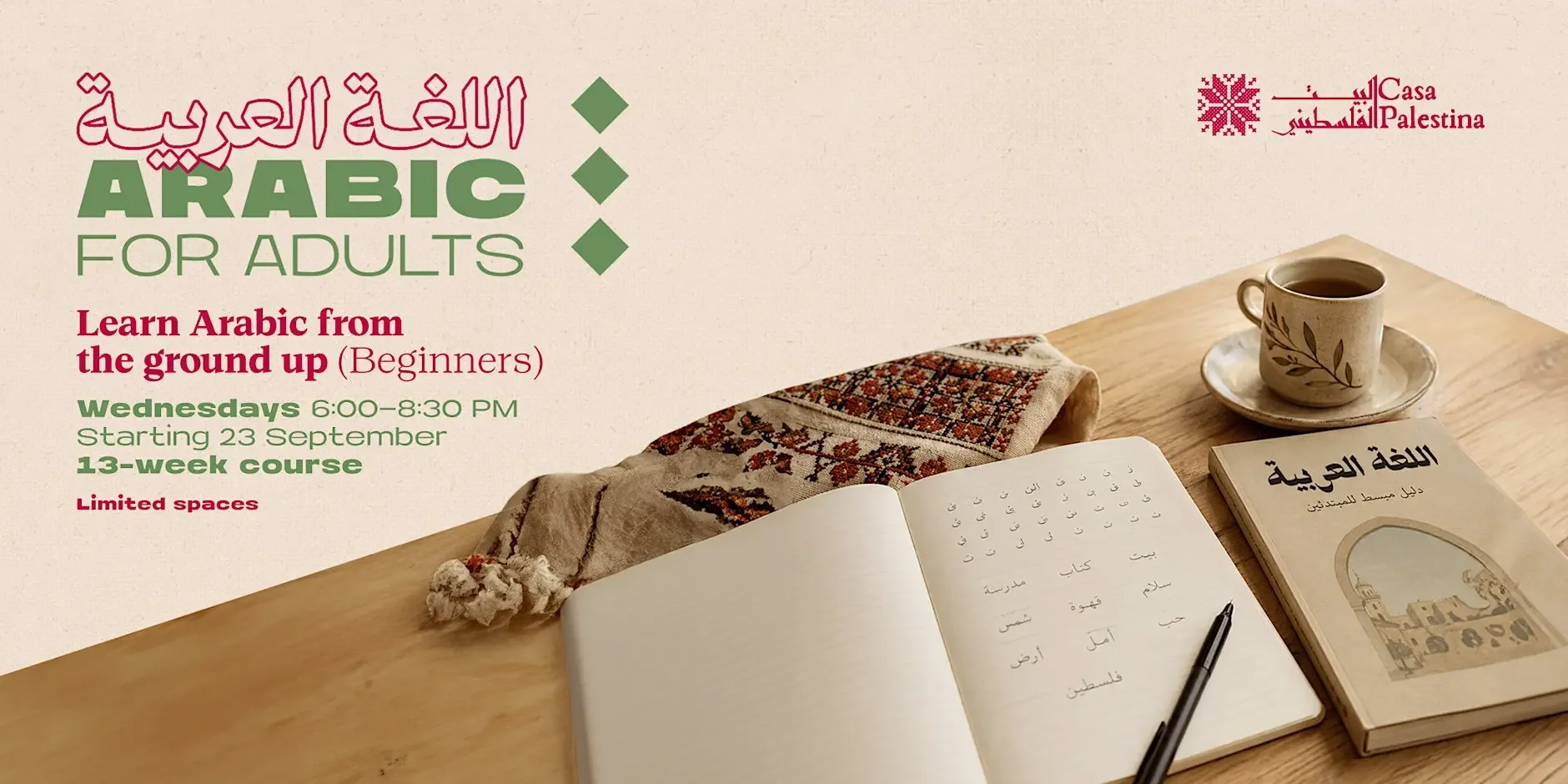
Arabic for Adults, Beginners
Learn Arabic from the ground up — reading, writing, everyday conversation, and the rhythm of a language carried by history.
Learn Arabic from the ground up — reading, writing, everyday conversation, and the rhythm of a language carried by history.
Join us at Casa Palestina Lisboa for a beginner Arabic course designed for anyone who wants to start learning the language in a practical, welcoming, and community-centred environment.
Whether you are learning Arabic for work, travel, everyday life, connection to culture, or simply because you have always wanted to learn, this course will give you a strong foundation in reading, writing, pronunciation, vocabulary, and conversation.
No previous knowledge of Arabic is required.
What You’ll Learn
Throughout the course, participants will begin to:
Read and write Arabic letters, words, and simple sentences
Recognise and pronounce Arabic sounds with greater confidence
Build useful everyday vocabulary
Understand the foundations of Arabic reading and writing
Ask and answer simple questions
Introduce themselves and communicate in everyday situations
Develop the confidence to hold basic conversations
Classes will be practical and interactive, with a small group size that allows everyone the opportunity to participate, practise, ask questions, and progress together.
By the end of the course, participants will have the foundations to read and write simple Arabic, understand and use everyday vocabulary, and take part in basic conversations. The cost of each ticket is 300€
Course Details
Duration: 32 hours
Number of sessions: 13
Day: Wednesdays
Time: 6:00 PM–8:30 PM
First class: Wednesday, 23 September 2026
Final class: Wednesday, 16 December 2026
Group size: 6–10 participants
Full Course Dates
23 September
30 September
7 October
14 October
21 October
28 October
4 November
11 November
18 November
25 November
2 December
9 December
16 December
The course runs across 13 consecutive Wednesdays, finishing before the Christmas break.
Who Is This Course For?
This course is designed for complete beginners. You do not need to know the Arabic alphabet or have any previous experience with the language.
Come to learn, practise, ask questions, and discover Arabic together in the welcoming space of Casa Palestina.
Spaces are limited to 10 participants. Booking is required.
____
Please note: A minimum of 6 students is required for each class to go ahead. If the minimum number of registrations is not reached, the class will be cancelled, and all registered students will receive a full refund.
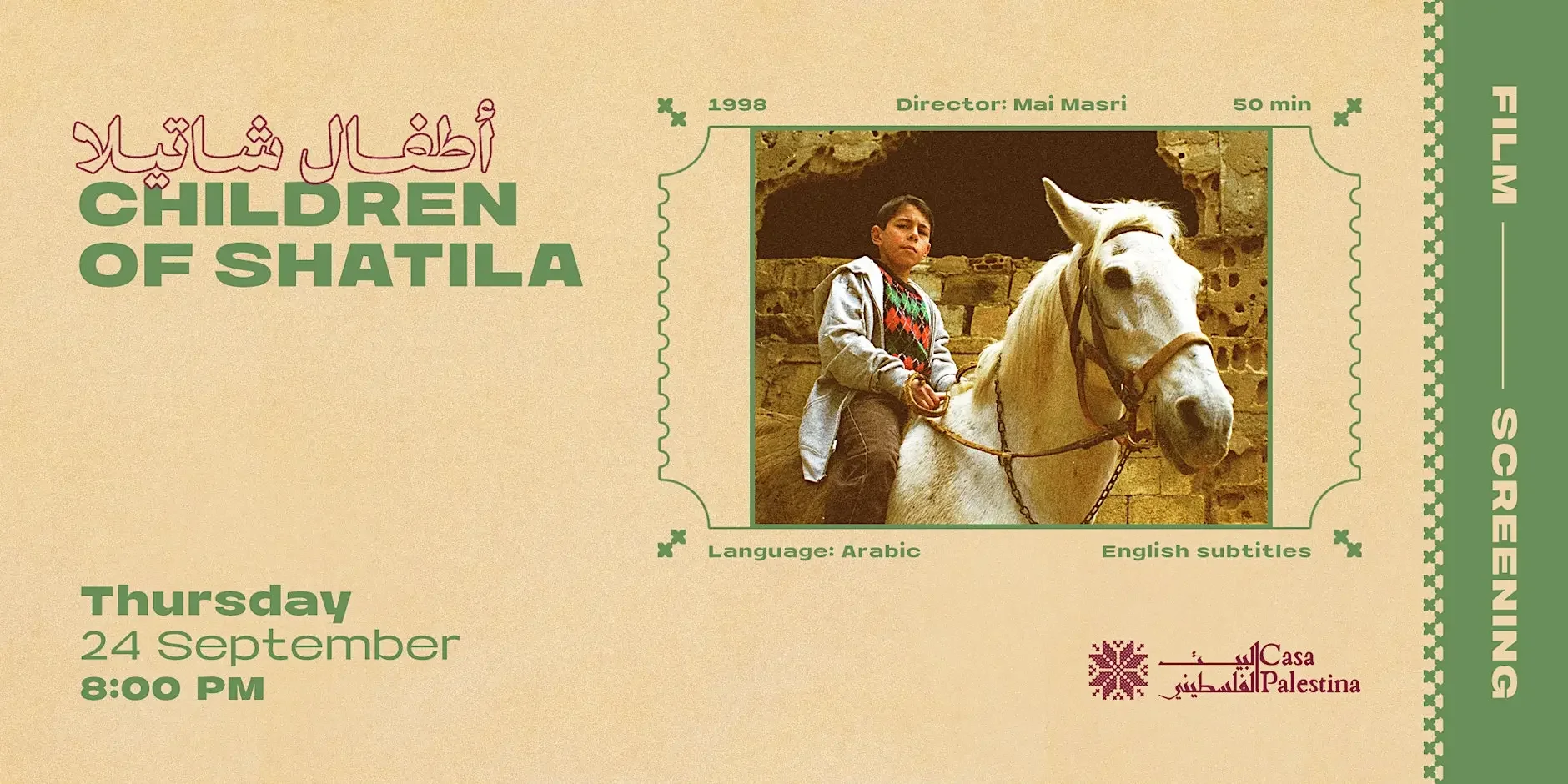
Children of Shatila Film Screening
Through the eyes of two Palestinian children, a portrait of memory, exile, and everyday life in Shatila refugee camp.
As we remember the Sabra and Shatila massacre of 16–18 September 1982, we turn not only to the violence of those days, but to the lives and communities that continued in their aftermath.
For many people around the world, the name Shatila became inseparable from the massacre of 1982. But Shatila is also a place of family, childhood, memory, and generations of Palestinian displacement.
Filmed in the late 1990s, Children of Shatila follows Farah, 11, and Issa, 12, two Palestinian children growing up in the Shatila refugee camp in Beirut. Fifty years after their grandparents were forced into exile from Palestine, they are navigating what it means to grow up as refugees in a camp shaped by massacre, siege, poverty, and displacement.
Director Mai Masri gives Farah and Issa video cameras, allowing them to document Shatila through their own eyes. Through their memories, friendships, daily lives, and hopes for the future, the film offers an intimate portrait of a generation born into exile, carrying the memory of a homeland they have never known.
1998 · 50 minutes · Arabic with English subtitles
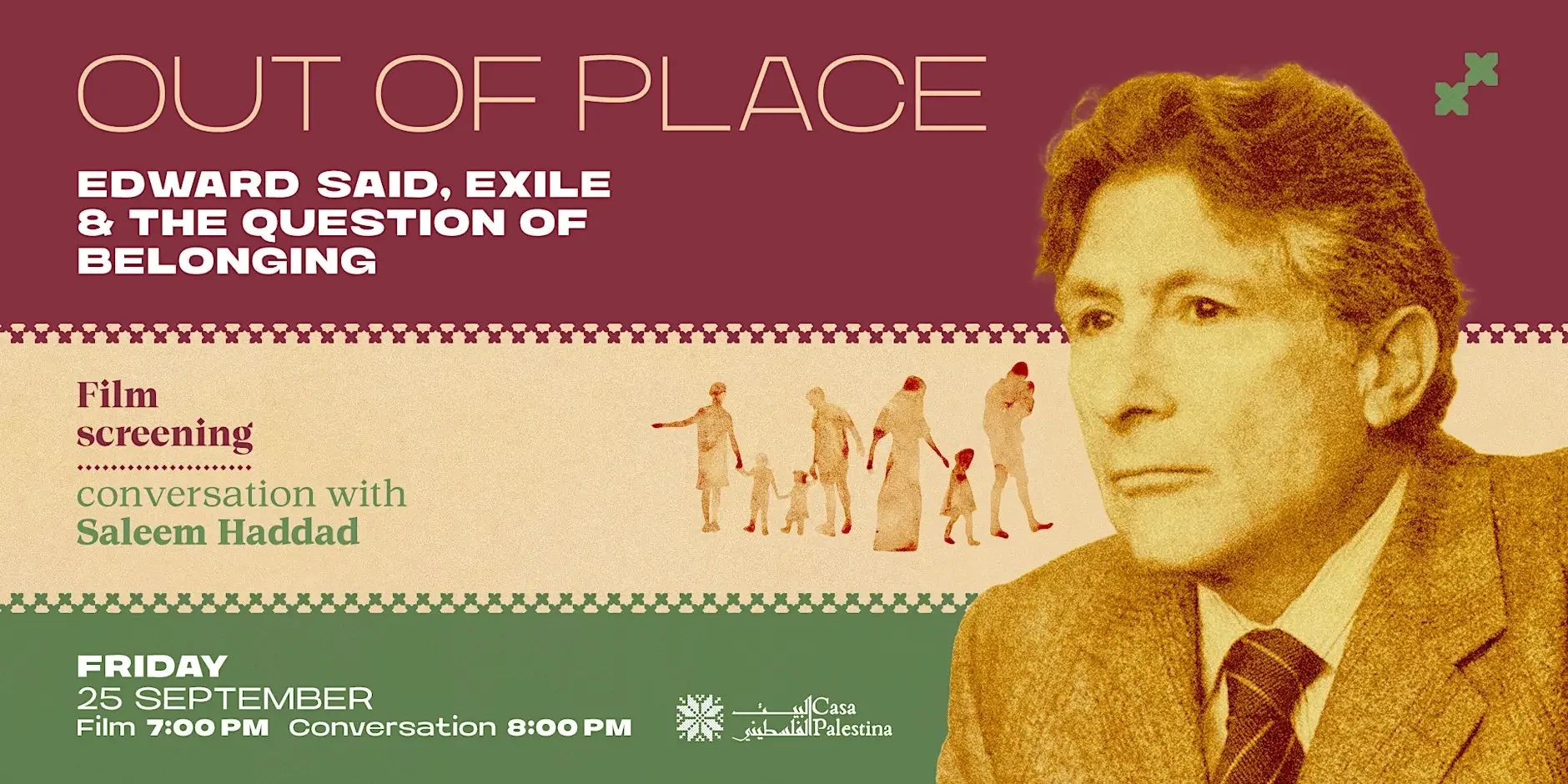
Out of Place: Edward Said, Exile & the Question of Belonging
Film screening + conversation with Saleem Haddad
An evening dedicated to the life and legacy of Edward Said, beginning with a screening of the BBC documentary Exile: Edward Said, followed by a conversation with writer Saleem Haddad.
Taking Said’s memoir, Out of Place, as a starting point, the discussion will explore some of the questions that shaped both his life and his wider body of work: exile, displacement, class, family, language, illness, memory, and the feeling of never fully belonging anywhere.
Said began writing Out of Place after receiving a serious medical diagnosis, turning back toward the world of his childhood across Palestine, Lebanon, and Egypt, a world shaped by movement, rupture, exile, and the knowledge that much of what he remembered could no longer be recovered.
Through the documentary and conversation, the evening will consider how Said wrote about home from a position of displacement, how memory becomes a way of preserving places that have been lost or transformed, and what it means to live between languages, histories, and identities.
More than a discussion of one memoir, the evening will reflect on Said’s enduring intellectual and political legacy, and on the questions of home, belonging, and exile that continue to resonate across Palestinian life today.
Programme
7:00 PM — Film Screening: Exile: Edward Said BBC Documentary
8:00 PM — Conversation with Saleem Haddad: Beginning with Out of Place and expanding into Said’s life, writing, and legacy.
The restaurant will be open.
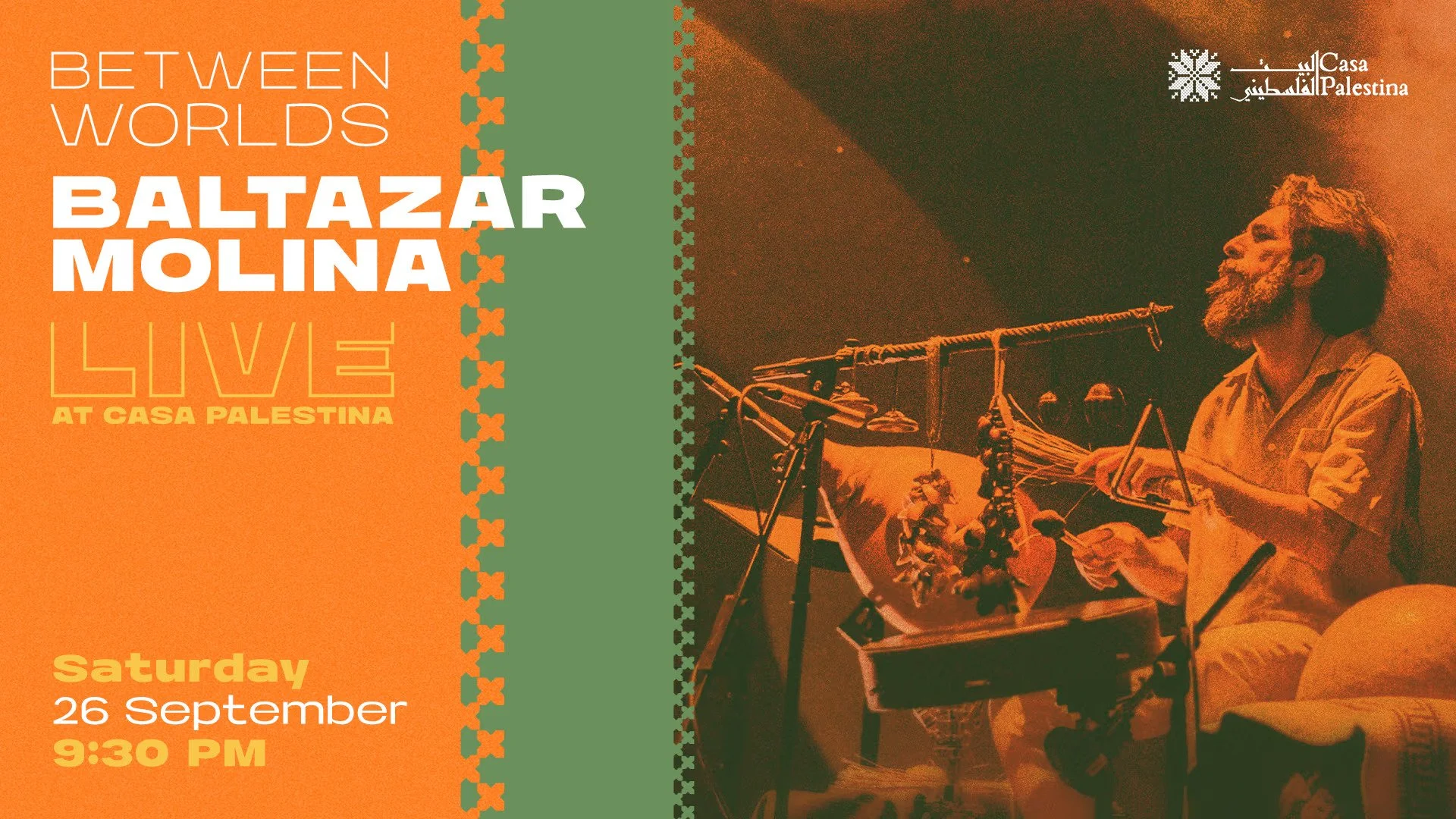
Between Worlds: Baltazar Molina Live At Casa Palestina
On September 26, Casa Palestina welcomes Baltazar Molina for an intimate live performance exploring the meeting points between musical traditions, improvisation, and sound experimentation. A musician and facilitator with a distinctive approach to composition and performance, Baltazar moves freely between diverse musical languages and techniques. His work is deeply inspired by the music of the Middle East, while remaining rooted in curiosity, experimentation, and the possibilities that emerge when different sonic worlds meet. Since 1998, he has performed and collaborated across an extensive range of projects, developing an eclectic body of work shaped by years of travel, exchange, and musical exploration. His performances have taken him across Portugal and throughout Europe, as well as to Mexico, Chile, Canada, Cabo Verde, Greece, and Morocco. For this evening at Casa Palestina, we gather for a live set that moves between tradition and experimentation, familiarity and discovery.
Doors Open at 8:00 PM
The restaurant will be open.
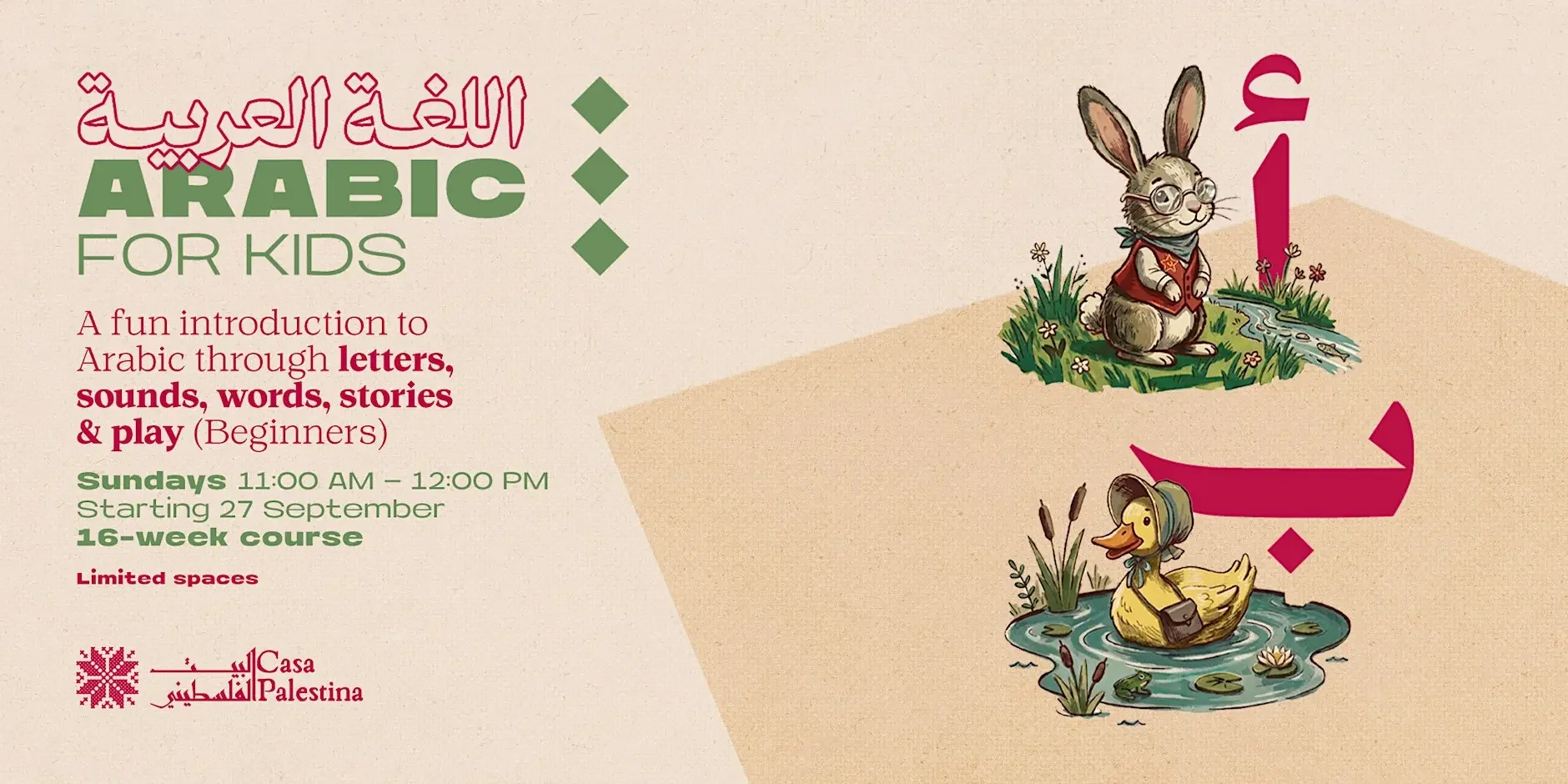
Arabic for Kids - Beginners
A fun and gentle introduction to Arabic through letters, sounds, words, stories, play, and conversation.
A fun and gentle introduction to Arabic through letters, sounds, words, and various activities.
Casa Palestina Lisboa invites children to discover Arabic in a warm, welcoming, and creative environment.
Our Arabic for Kids — Beginners course is designed as a gentle first introduction to the language, helping children become familiar with Arabic letters, sounds, and simple words.
Classes combine language learning with play, games, and interactive activities, giving children the opportunity to learn at their own pace while building a positive and joyful relationship with Arabic and the cultures it carries.
No previous knowledge of Arabic is required.
What Children Will Explore
Throughout the course, children will be introduced to:
Arabic letters and their sounds
Basic reading and writing
Simple Arabic words and expressions
Listening and pronunciation
Learning through games and creative activities
The aim is to make Arabic feel familiar, joyful, and accessible — a language children can begin to recognise, speak, and carry with them beyond the classroom.
Course Details
Course: Arabic for Kids — Beginners
Duration: 16 hours
Number of sessions: 16
Day: Sundays
Time: 11:00 AM–12:00 PM
First class: Sunday, 27 September 2026
Final class: Sunday, 31 January 2027
There will be a pause during the Christmas school break.
Location:
Casa Palestina Lisboa
Rua Gilberto Rola 24
Alcântara, Lisbon
Course fee: €150 per child for the full course
Age range: To be confirmed
Group size: 6–10 children
Full Course Dates:
27 September
4 October
11 October
18 October
25 October
1 November
8 November
15 November
22 November
29 November
6 December
13 December
Christmas break — no classes:
20 December
27 December
3 January
Classes return:
17 January
24 January
31 January
Spaces are limited to 10 children. Advance booking is required.
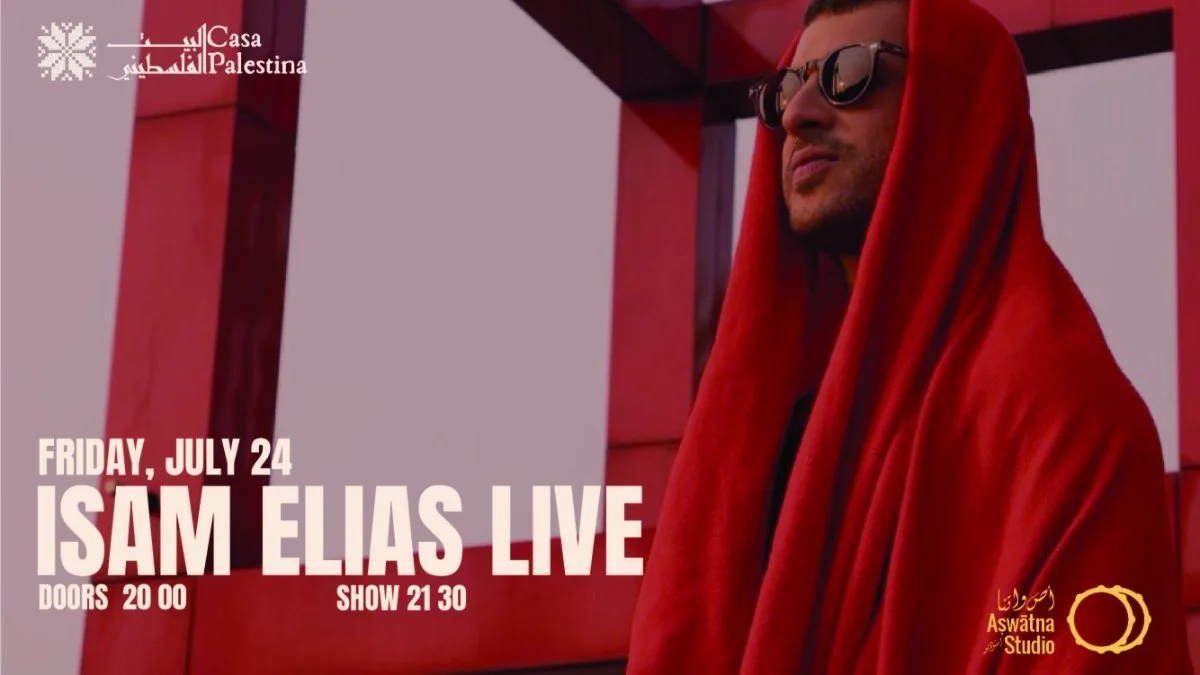
Isam Elias Live
Isam Elias is a Palestinian pianist, composer, singer, and songwriter. Deeply influenced by traditional Arab music from an early age, he began playing the piano at just six years old.
His music is a journey through Western production styles and rhythms, placing the piano at the forefront alongside synthesizers, Afro-Oriental dance grooves, and touches of dancehall. Blending Eastern folk melodies with powerful electronic textures and the infectious rhythms of Middle Eastern dabkeh, Isam creates a distinctive sound that bridges tradition and contemporary dance music.
In June 2025, he released his debut EP, TUBES. The five-track project evolved from Isam’s live performances, translating the energy and spontaneity of the stage into recorded form. Combining piano, synthesizers, electronic rhythms, and vocals, TUBES is rooted in improvisation and reflects Isam’s signature Afro-electronic sound, seamlessly connecting live musicianship with modern dance and melodic influences.
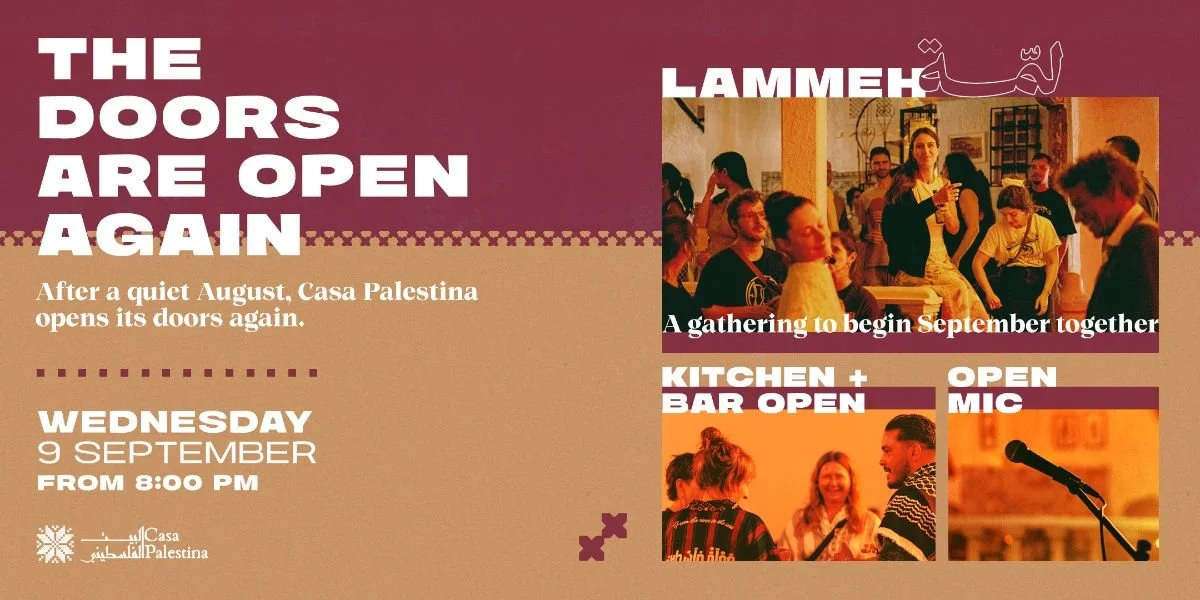
THE DOORS ARE OPEN AGAIN لمّة — LAMMEH
Casa Palestina opens its doors again with an evening of open mic, shared ideas, conversation, food, and community.
After a quiet August, the doors of Casa Palestina are opening again.
We’re welcoming the community back into the house for an evening of gathering, conversation, and shared ideas as we begin a new season together.
Come hear a little about what we have been shaping for the months ahead — and then help us shape what comes next.
OPEN MIC
The mic is open to everyone.
Bring a summer story, a poem, a thought, a song, something you have been working on, or something still unfinished.
No pressure and no formal programme — just space to share.
WHAT DO YOU WANT FROM CASA?
Throughout the evening, we’ll invite you to tell us what you would like to see, learn, hear, or offer at Casa this autumn.
A workshop you want to take part in?
A film you want to watch?
A conversation you think we should have?
Something you would like to teach, share, or contribute?
Post-its, pens, and ideas will fill the house.
لمّة — lammeh — is a gathering: people coming together around a table, in a room, in a home.
That is how we want to begin September.
Come early. Stay late.
Kitchen + bar open.
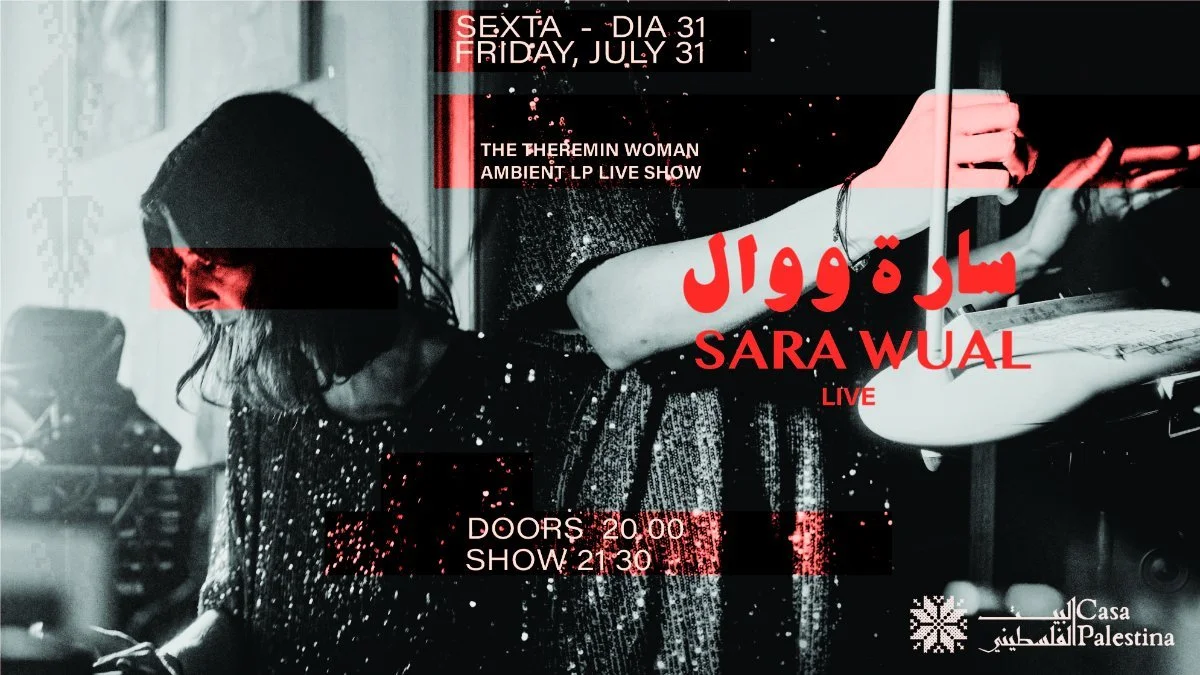
Sara Wual- The Theremin Woman Lp Live Show
The Theremin Woman” (2026) is the debut Ambient and Experimental music release of the multi-instrumentalist live performer Sara Wual.
Divided in two volumes, the deep, nostalgic and slightly psychadelic LP will be interpreted live with machines at Casa Palestina. This concert on July 31st marks the official launch of the album’s Vol. II on all platforms (except Spotify for clear, stated reasons).
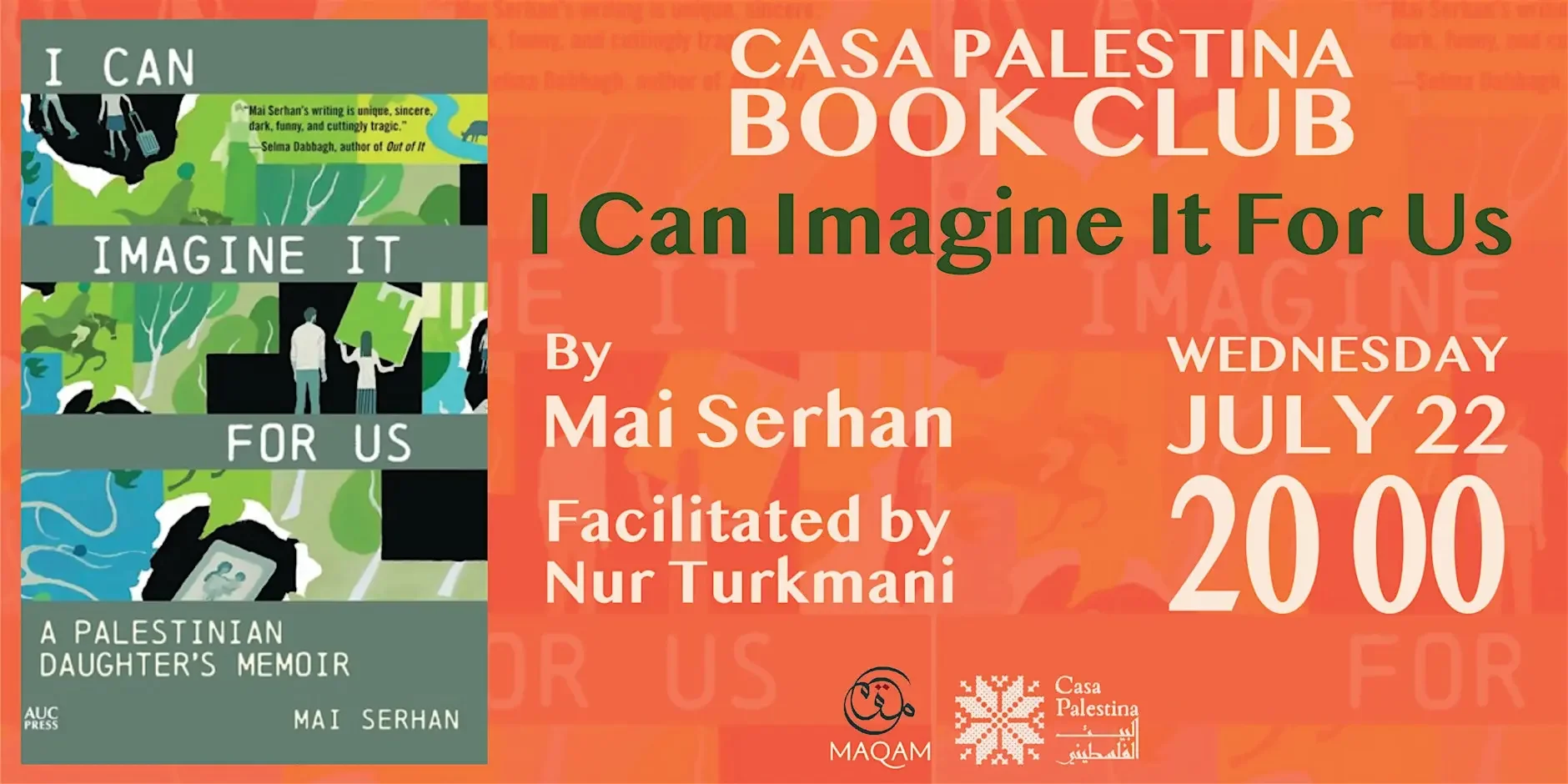
Casa Palestina Book Club: I Can Imagine It For Us
Join us for the first Casa Palestina Book Club, an intimate evening of collective reading, reflection, and conversation.
We’re very happy to launch the Casa Palestina Book Club, a new intimate reading and discussion space hosted at Casa Palestina in Lisbon and curated by the MAQAM team.
The book club brings readers together around books from across the region and its diasporas, creating space for collective reading, reflection, and conversation.
For our first session, facilitated by Nur Turkmani, we will be reading I Can Imagine It For Us by Mai Serhan. The book is a memoir that moves across Palestine, Lebanon, Egypt, the UAE, and China. We have chosen it as a starting point for a conversation around memory, family, place, inheritance, and the intimate ways we imagine ourselves and each other across distance.
The session will include a short introduction to the book and writer, followed by collective reading and open discussion. Together, we will move through selected passages, share reflections, and introduce the wider spirit of the book club.
Copies available:
There are 9 physical copies of I Can Imagine It For Us available to buy at MAQAM / Casa Palestina ahead of the session.
Programme:
Introduction to the book club
Introduction to I Can Imagine It For Us
Collective reading
Open discussion
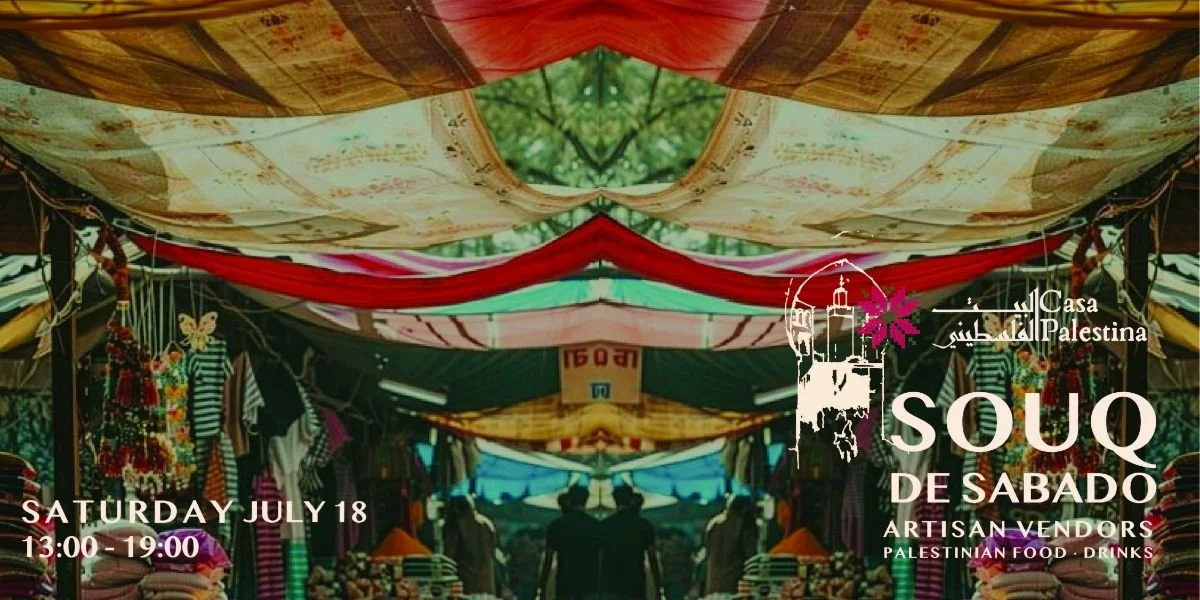
SOUQ De Sabado
Artisan Vendors, Food, Drinks
Casa Palestina opens its doors, an invitation to the community to come and discover the space. Drift through the house, spend the day with us, taste Palestinian flavors, and along the way, discover artisans offering pieces to take home, clothing, jewelry, and other carefully crafted goods. Linger a little longer than planned.
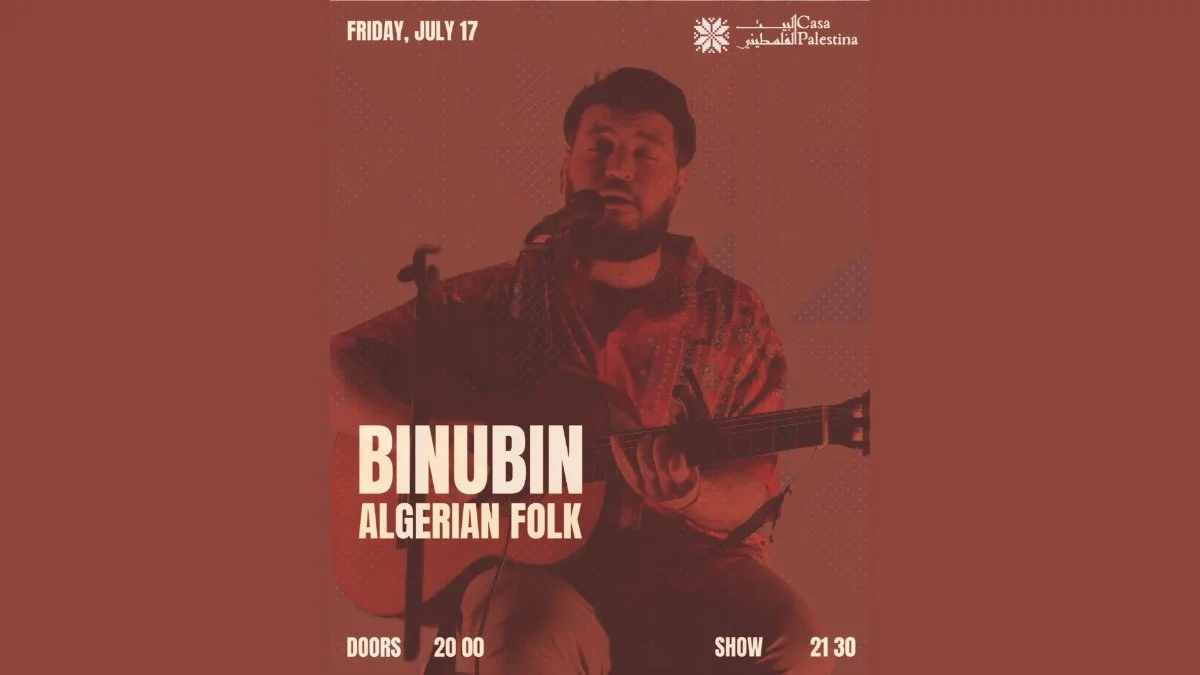
Binubin
Experience an intimate live performance where Algerian folk, soul, and contemporary sounds come together.
BINUBIN, the project of Algerian singer-songwriter Samy Zeghmati, weaves traditional Algerian melodies with contemporary folk and soul. His music explores themes of migration, identity, and life lived “bin u bin” between cultures, places, and experiences.
Through original compositions and heartfelt reinterpretations of beloved artists such as Souad Massi and Labess, BINUBIN creates a space where memory, longing, and rhythm meet.
For this special evening, Samy will also be joined by fellow musicians and friends for an improvised jam session, celebrating connection, spontaneity, and shared musical journeys.
An evening of songs, percussion, nostalgia, and connection.
🫓Enjoy our mezze menu and drinks from 18:00

Alchemical storytelling lab
Explore the Hero’s Journey and Kishōtenketsu to transform ideas into stories through theory and creative practice.
This workshop explores the inner workings of stories and storytelling through two distinct narrative structures: the Hero’s Journey and Kishōtenketsu (起承転結). Through comparative analysis and creative experimentation, participants will examine the fundamental elements that make up a story—change, character, action, scene, act, and movement.

Juan Ferracioli Live
Juan Ferracioli mistura sonoridades brasileiras com experimentações psicodélicas e intensas. Tendo a viola caipira (instrumento tradicional brasileiro de dez cordas) como elemento central. Une tradição e inovação ao propor uma nova leitura do instrumento, sem se afastar de suas raízes. Em seu trabalho autoral, traz fragmentos do interior do Brasil e narra odisséias caipiras de forma singular.
Juan Ferracioli mix Brazilian sonority with psychedelic experimentation, placing the viola caipira (a traditional ten-string Brazilian instrument) at the center of his sound.
He bridges tradition and innovation, offering a fresh take on the instrument without straying from its roots. In his original work, he draws on fragments of Brazil’s countryside, narrating rural odysseys in a voice all his own.
Doors Open at 8:00 PM
Show at 9: 30 PM
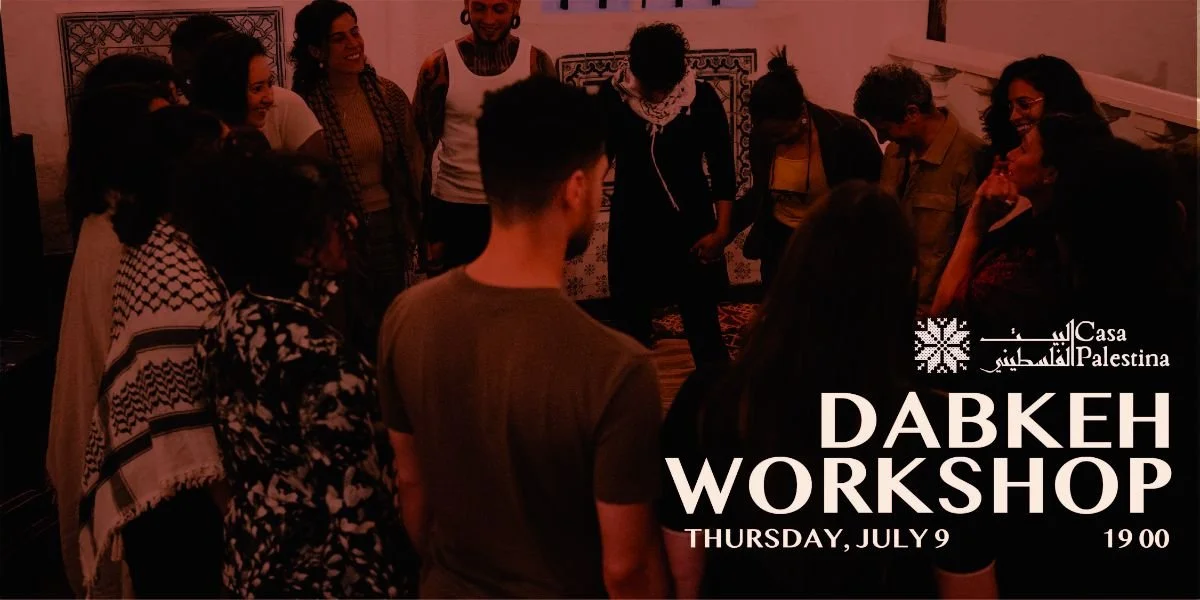
Dabke Workshop
Move, sweat, and connect through Palestinian dabkeh.
Rooted in Palestinian tradition, this 1.5-hour experience invites us to connect with ancestral rhythms carried across generations and throughout the diaspora.
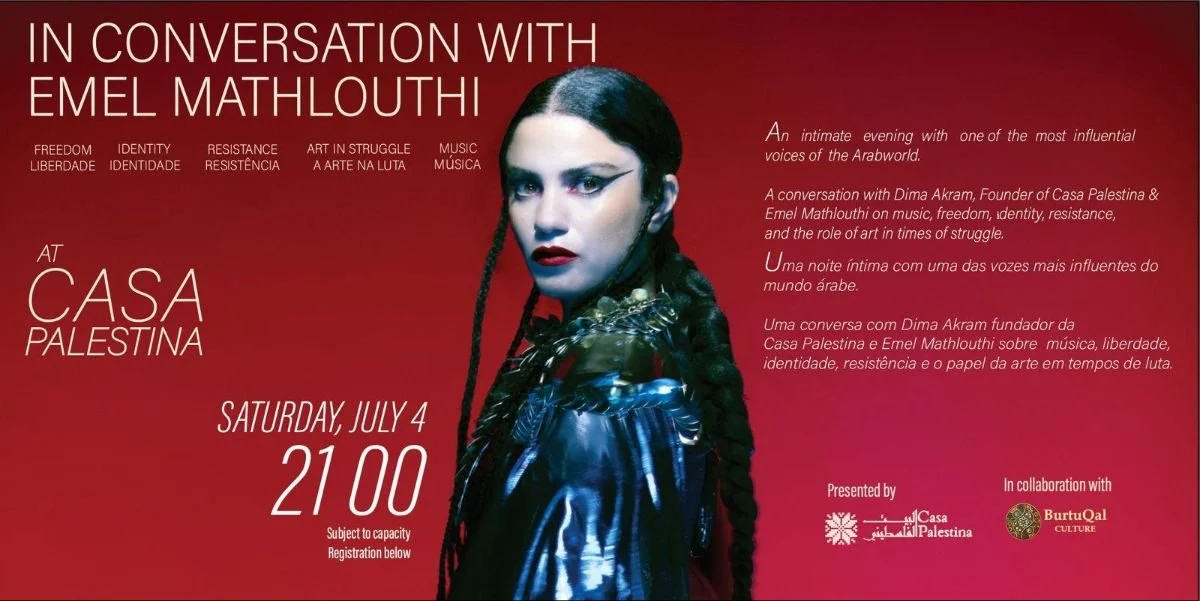
In conversation with Emel Mathlouthi
This Saturday, July 4, Emel sits in conversation with Dima Akram at Casa Palestina — to speak about music, resistance, identity, and the role of art in times of genocide. We do not gather to be entertained. We gather because Kelmti Horra. Because our word is still free. Because it has to be.
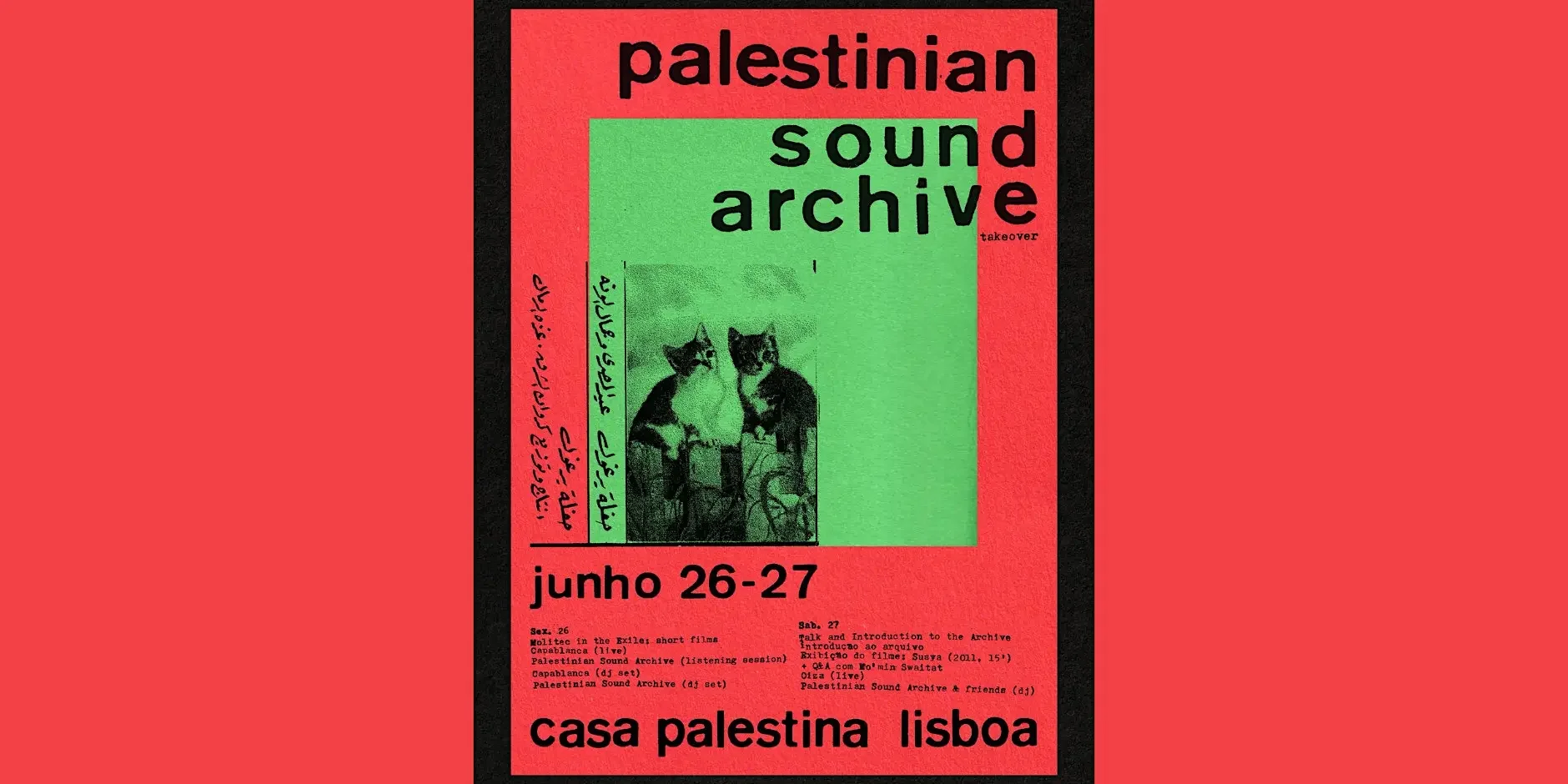
My beautiful side of the Archive
A weekend of Palestinian archives, film, listening sessions, storytelling, and DJ sets.
Casa Palestina is excited to welcome the Palestinian Sound Archive for a weekend takeover.
Bringing Forth Palestine’s South Africa Moment
Boycots, Sanctions, and People Power in the Struggle for Justice
Casa Palestina invites you to an evening talk with Palestinian advocate, strategist, and entrepreneur Saleh Hijazi.
Introduction to Tatreez: Traditional Palestinian Embroidery
Discover the beauty of Palestinian tatreez, learn stitches, symbols, and stories in a hands on, beginner-friendly embroidery workshop.
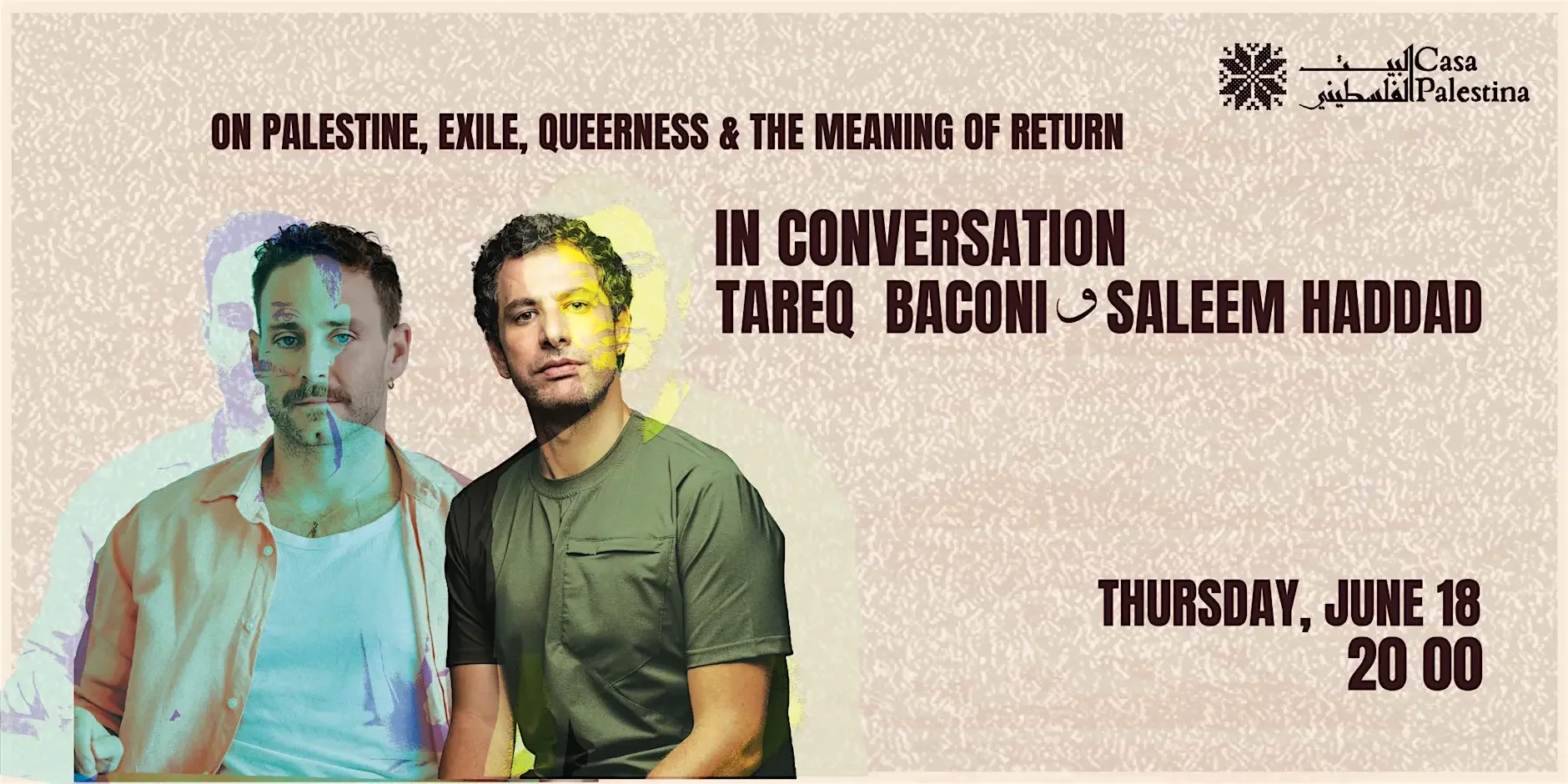
In conversation with Tareq Baconi & Saleem Haddad
Tareq Baconi & Saleem Haddad on Palestine, Exile, Queerness, and the Meaning of Return
Palestinian writers Tareq Baconi and Saleem Haddad come together for a conversation that moves between fiction and memoir, politics and intimacy.
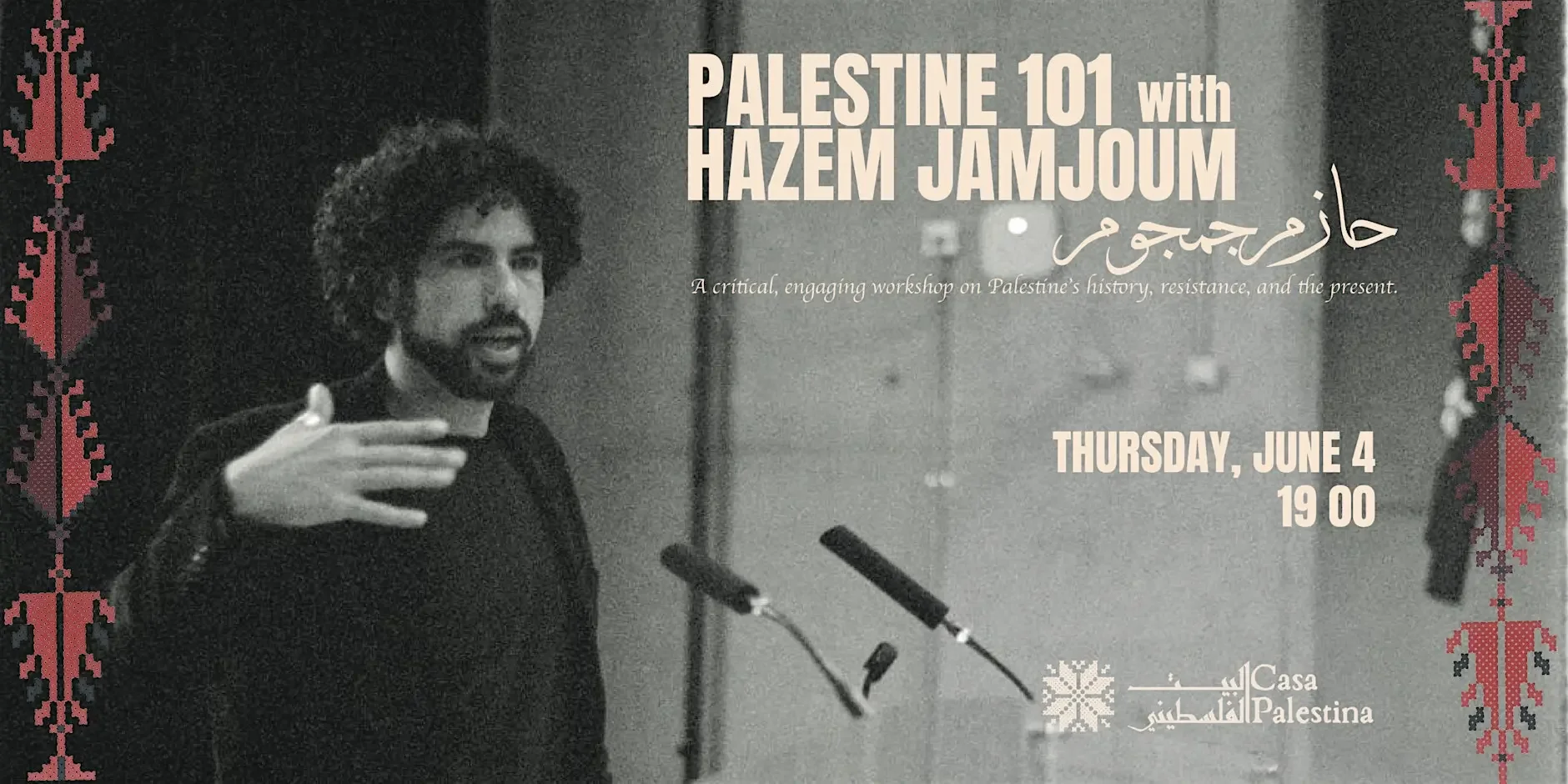
Palestine 101 with Hazem Jamjoum
Casa Palestina is collaborating with Palestinian historian and educator Hazem Jamjoum to present a workshop exploring the history of resistance in Palestine. The session offers a clear, accessible overview of this history from the late 19th century to the present day, while creating space for respectful questions and open discussion.
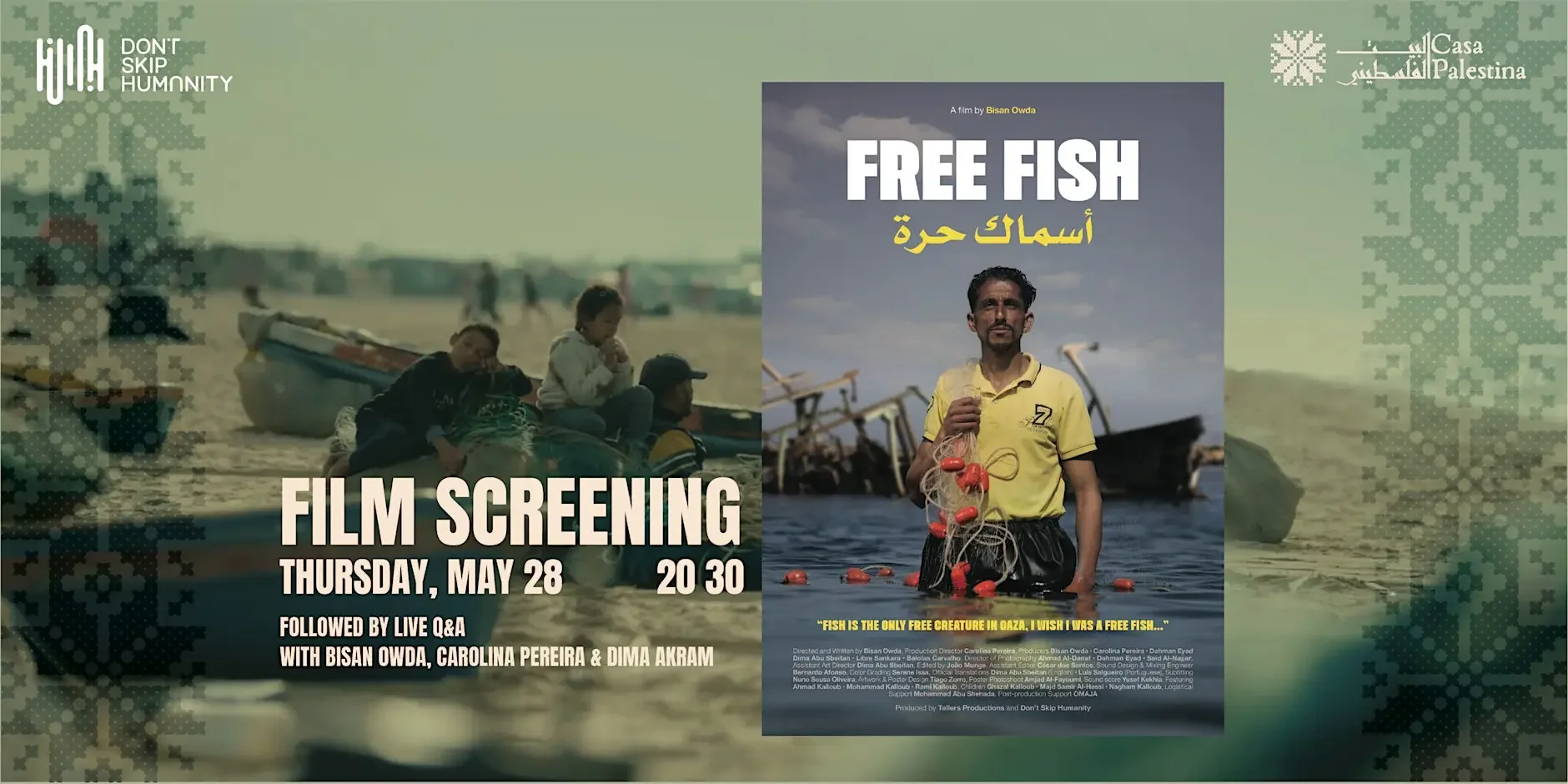
FREE FISH Screening + Q&A with Bisan Owda
A documentary filmed in Gaza. Free Fish screening + live Q&A with Bisan Owda connecting from Gaza.
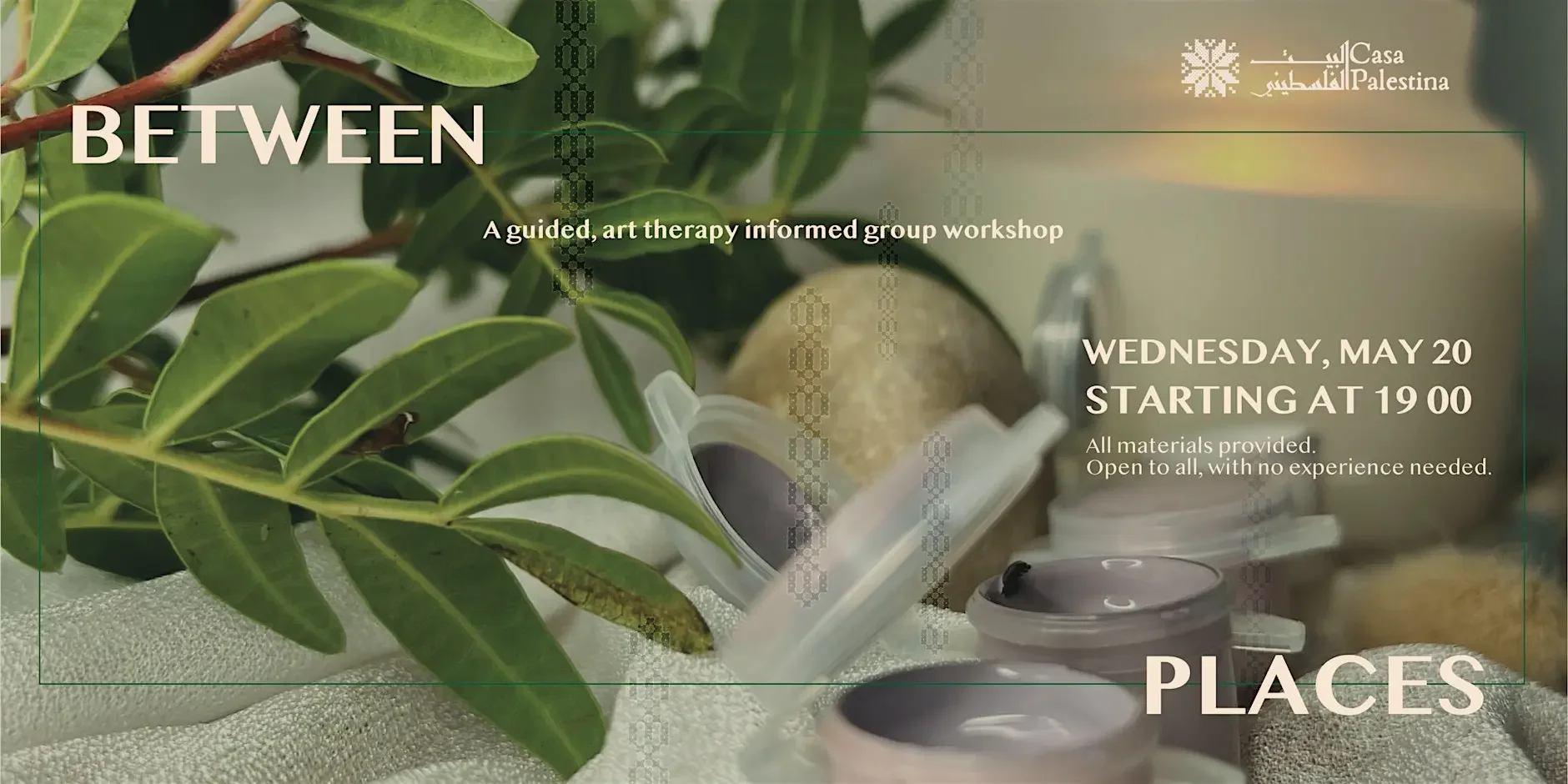
Between Places: A Mindful Art Exploration of Memory and Belonging
Explore memory, identity, and belonging through mindful art, no experience needed. A gentle, guided space for reflection and connection.
This guided, art-therapy-informed group workshop offers a space for reflection, expression, and connection through simple art-making.
Introduction to Tatreez: Traditional Palestinian Embroidery (Copy)
Discover the beauty of Palestinian tatreez, learn stitches, symbols, and stories in a hands on, beginner-friendly embroidery workshop.
Introduction to Tatreez: Traditional Palestinian Embroidery
Discover the beauty of Palestinian tatreez, learn stitches, symbols, and stories in a hands on, beginner-friendly embroidery workshop.
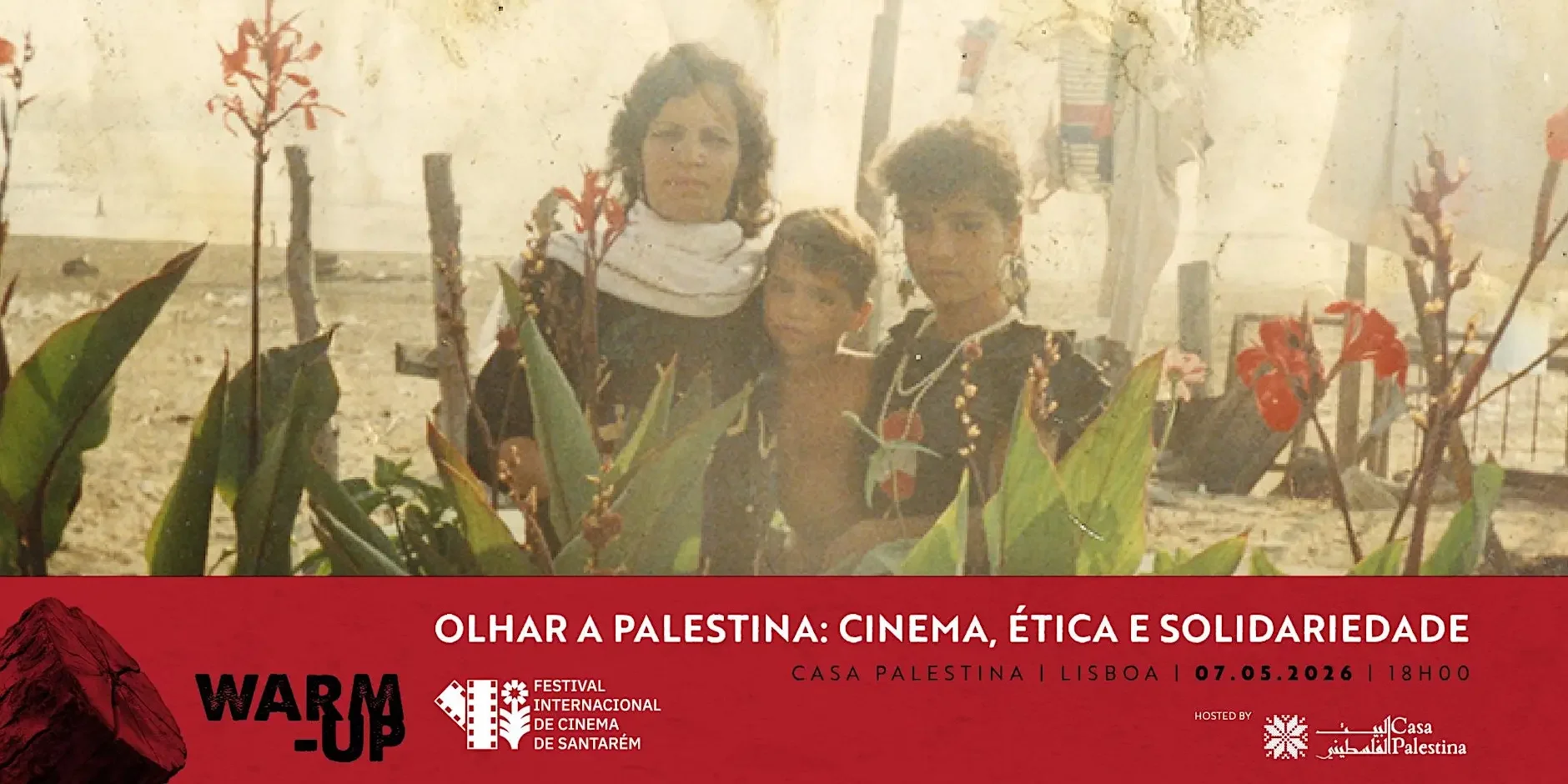
FICS em Lisboa: Cinema, Ética e Solidariedade
O Festival Internacional de Cinema de Santarém (FICS) apresenta a sua 19.ª edição num encontro especial em Lisboa, na Casa Palestina.
———
The Santarém International Film Festival (FICS) presents its 19th edition at a special event in Lisbon, at Casa Palestina.
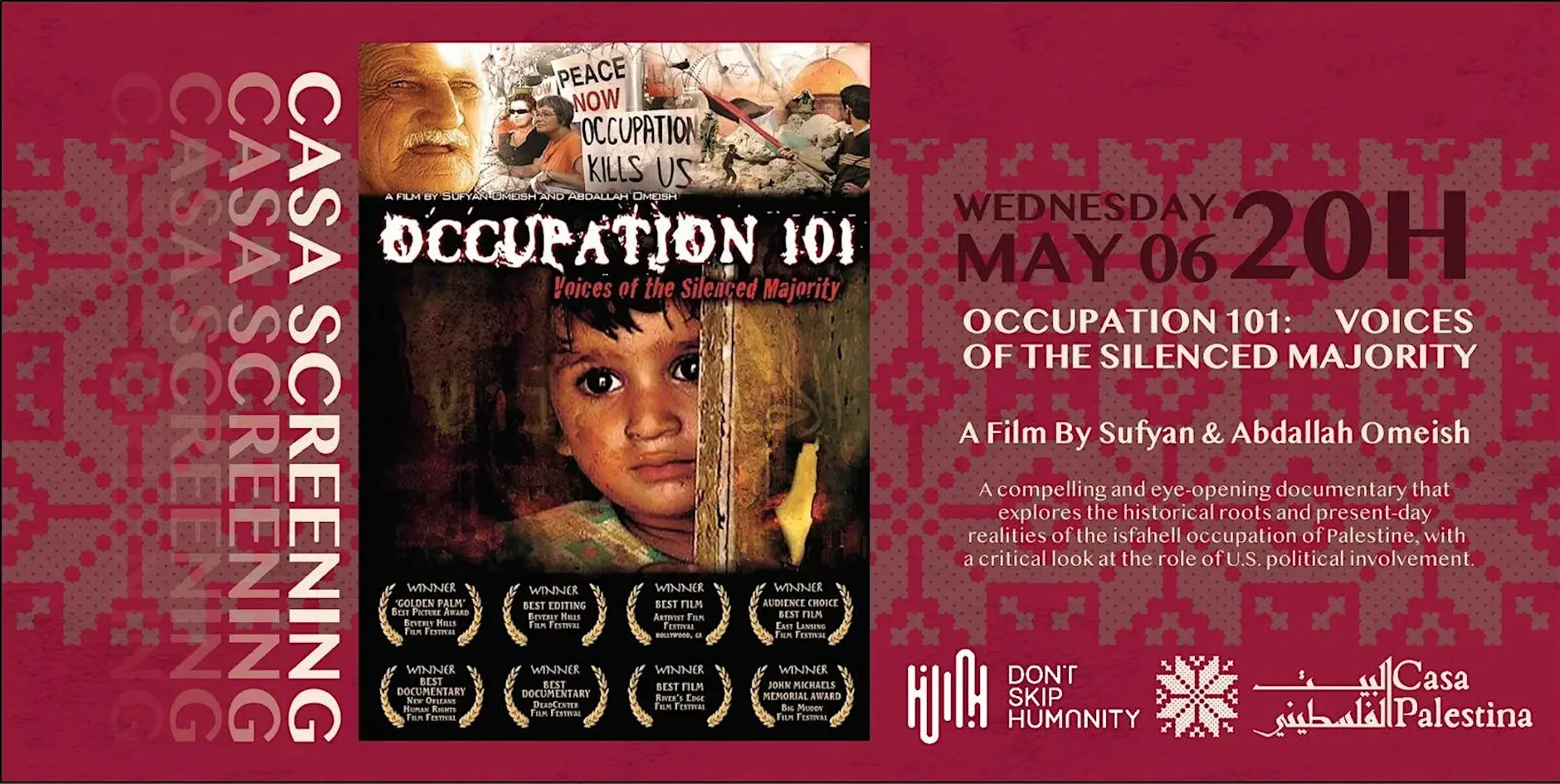
Film Screening - Occupation 101: Voices of the Silenced Majority
Eye-opening documentary on the roots and realities of the Israeli occupation of Palestine and the role of U.S. political involvement.
Directed by Abdallah Omeish and Sufyan Omeish.

The Horse of Jenin - Palestinian Comedy Show
The Horse of Jenin, written and performed by Palestinian actor Alaa Shehada, takes us back to childhood, where all a boy really wants is to play, laugh, and imagine. Even in the middle of destruction, imagination finds a way to build something powerful.
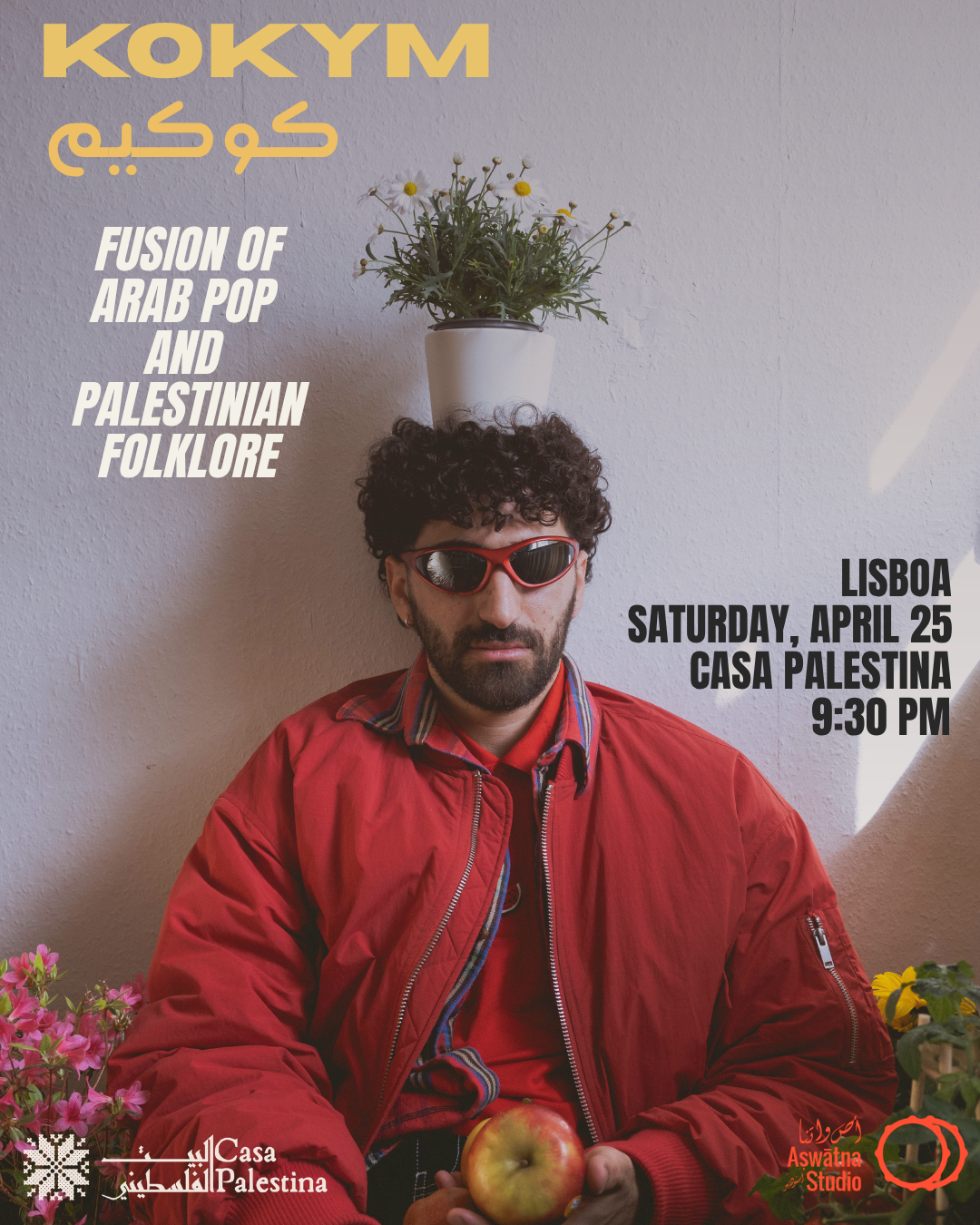
KOKYM
Casa Palestina is excited to welcome Kokym, a Palestinian artist and the pioneer of Fallahi Pop — a genre he created by blending alternative Arab pop with rural Palestinian folklore and dialect.
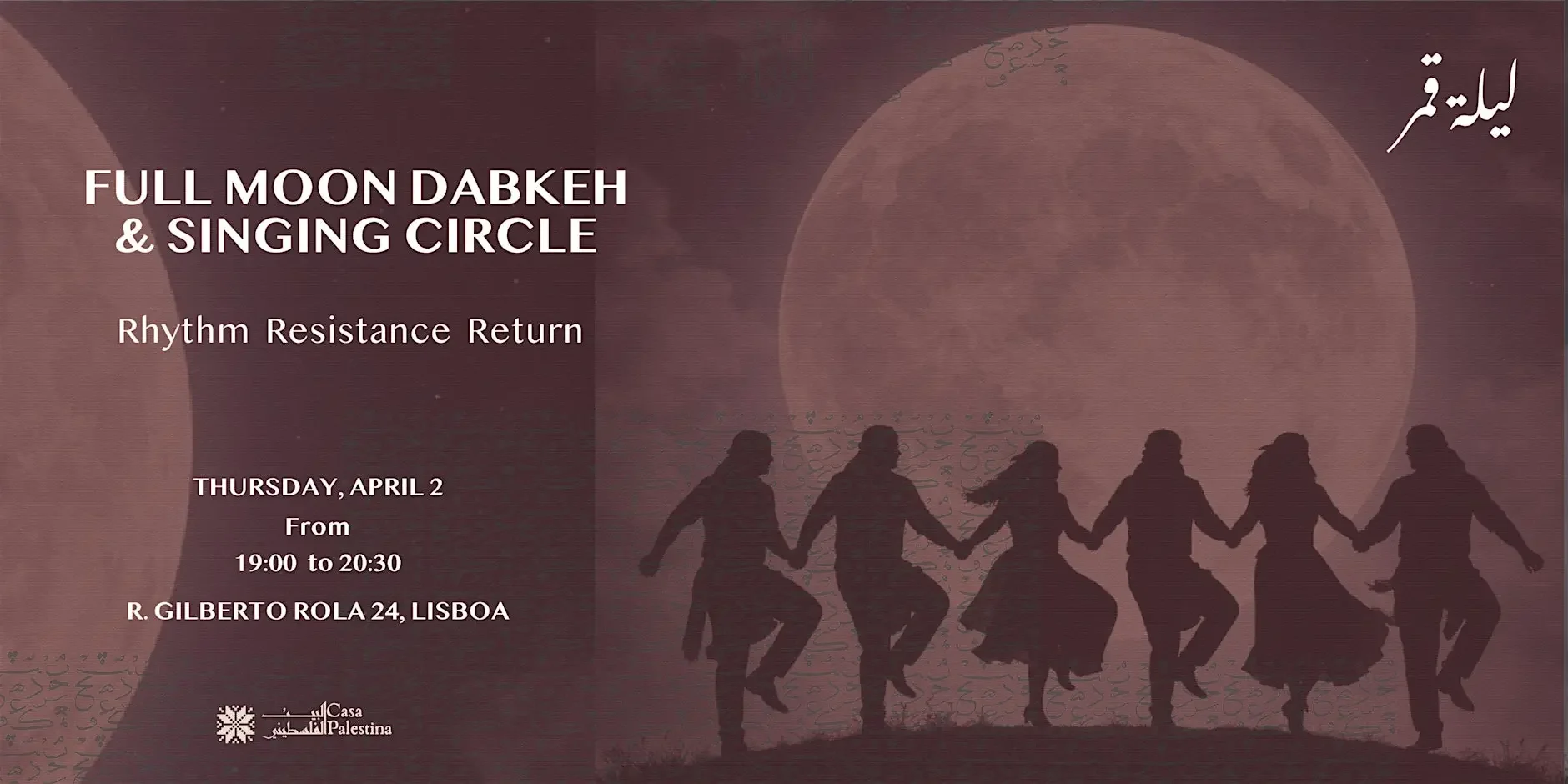
Full Moon Dabkeh & Singing Circle
Under the full moon, gather in a circle of rhythm, movement, and voice.
Rooted in Palestinian tradition, this 1.5-hour experience invites us to connect with ancestral rhythms carried through the diaspora. Through dabkeh, collective singing, and grounding practices, we honour what lives in our bodies and remember what came before us.